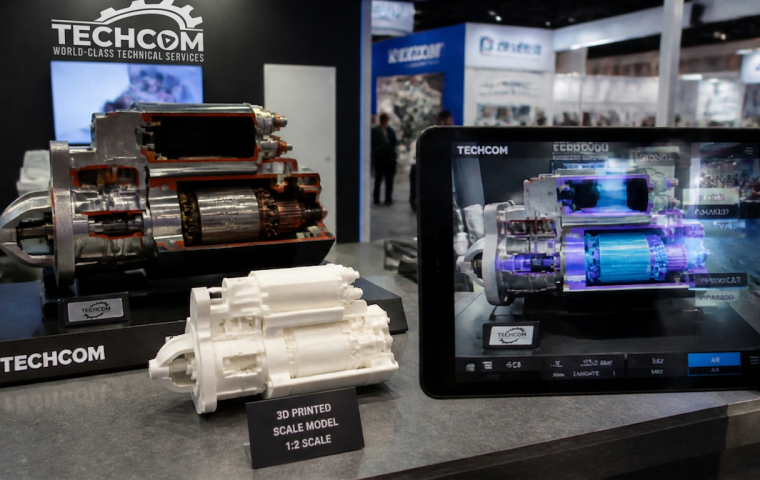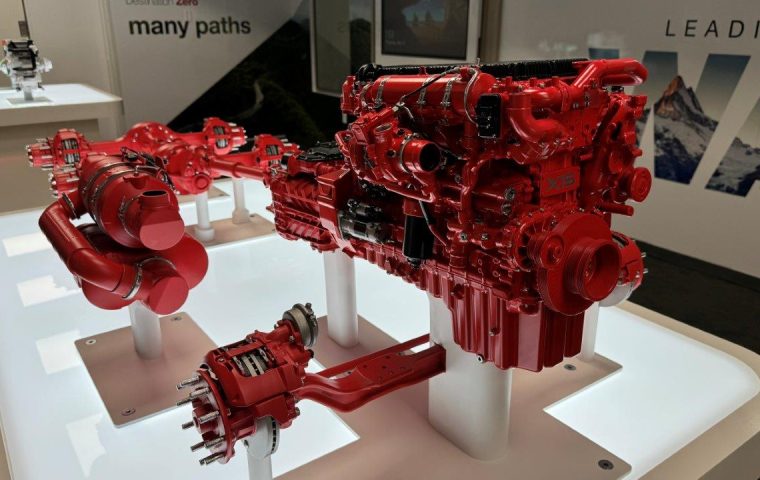

A 3D-printed scale model turns the CAD data your engineers already have into a physical object you can hand to a customer, place on a trade show counter, or use in a briefing. The process has six stages: file intake, scale planning, model preparation, printing, finishing and painting, and final assembly.
TECHCOM produces detailed, camera-ready 3D-printed models at virtually any size, from desktop models to large display trade show pieces. If you have never ordered one, here is exactly how it works.
Why a Scale Model Instead of the Real Thing?
Full-size equipment is often too large, too heavy, or too expensive to ship to every event. A scale model can:
- Show an entire vehicle, engine, or system on a tabletop
- Revealing a product before production hardware exists
- Travel in carry-on luggage for sales meetings
- Be produced in multiples for several shows or regional teams
- Include color-coding or transparent sections to show internal systems
Step 1: CAD File Intake
The process starts with your 3D data. Helpful formats include:
- STEP (.stp/.step): the most common neutral format and usually the best starting point
- Native files from SolidWorks, Creo, NX, Inventor or CATIA
- STL: acceptable, but it has less precise geometry and loses assembly structure
Simplified or "display" versions of the assembly are welcome. The model does not need every fastener, and removing proprietary internal geometry is often the right decision.
Step 2: Choosing the Scale
Scale balances detail and practicality. Larger scales show more detail; smaller scales are cheaper, lighter, and easier to transport. At small scales, very thin features such as fins, wires, and brackets may need to be slightly thickened to print reliably and survive handling. We review those features with you before printing.
Step 3: Preparing the Model for Print
Engineering CAD is designed for manufacturing, not printing. Preparation includes:
- Repairing geometry so every part is a closed, printable solid
- Splitting the model into sections that fit the printer and hide seams in natural break lines
- Adding alignment pins and joints for clean assembly
- Orienting parts to put the best surface quality where viewers will look
- Planning colors and materials by component or system
Step 4: Printing
Different parts may use different printing processes and materials depending on the detail, strength, and finish they need. High-resolution processes capture fine features, while tougher materials suit larger structural parts.
Step 5: Finishing and Paint
The raw print is not yet camera-ready. Finishing typically includes support removal, sanding, priming, and filling to remove layer lines, then painting to match production colors or a system color-code. Decals, logos, and graphics are applied last. This hand-finishing is what separates a display-quality model from a prototype.
Step 6: Assembly, Base and Protection
Parts are assembled, bonded and mounted to a display base. Optional additions include acrylic covers, turntables, lighting and a custom travel case or crate.
Protecting Your Proprietary Data
Engineering data is valuable, and TECHCOM handles it accordingly. We work with your team to use only the geometry the model requires, and we treat files as confidential. TECHCOM also supports defense programs where data security is essential. Typical Timeline Most scale models take 3 to 6 weeks from receipt of approved CAD, depending on size, part count, and finish level. Rush schedules may be possible for show deadlines.
Frequently Asked Questions
What file format should I send for a 3D-printed model?
STEP is usually best. Native CAD files also work. STL is acceptable but loses assembly structure and precision.
Can you make a model before the product exists?
Yes. Because models are built from CAD, they can show products that are still in development.
Can a 3D-printed model show internal components?
Yes. Models can include sectioned areas, removable covers, or transparent parts to reveal internal systems.
Should I choose a scale model or a cutaway?
A cutaway uses real hardware and is ideal for authenticity. A scale model is lighter, easier to ship, and possible before production. Our guide compares the options: Cutaway, 3D Print, or AR.
Start With Your CAD
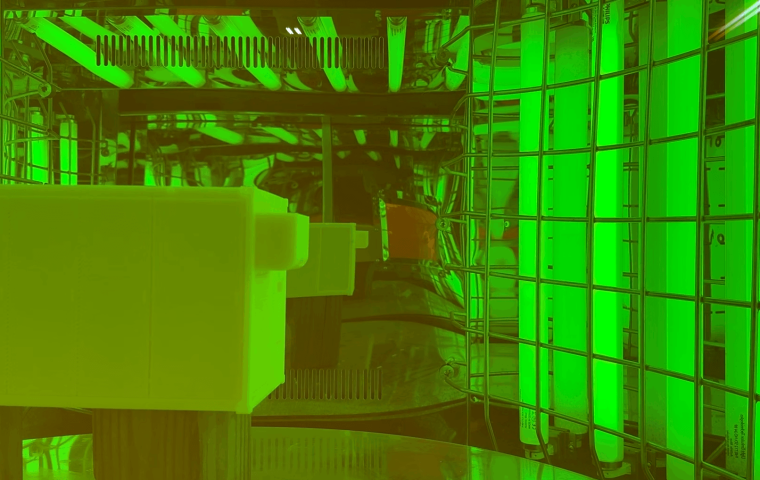
To see how printed parts are finished, read about our 3-D printing curing process, and see a finished example in the 3-D printed Cummins generator.
Send us your files and your goals, and we will recommend the right scale and finish. Visit our 3D Print page or call (317) 865-2530.

About TECHCOM
The company's mission is simple: solve problems. We take our clients' problems and make them our own. As a certified SBA WOSB and WBE, TECHCOM offers boutique-agency agility with the past performance of a global defense contractor — supporting programs like the OMFV, Cummins ACE, and Allison eGen Force with the technical visualization and documentation that power the modern warfighter.
Be sure to follow us for updates on social media on Facebook, X, and LinkedIn.