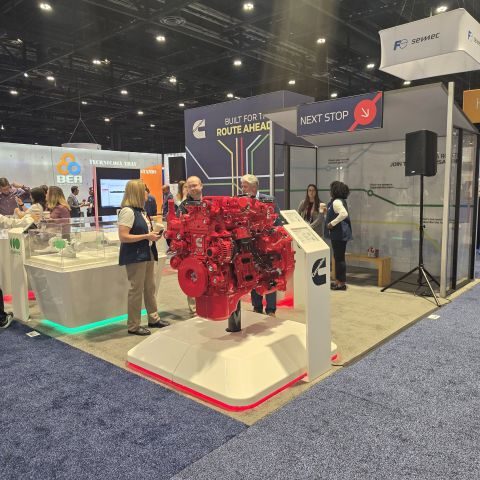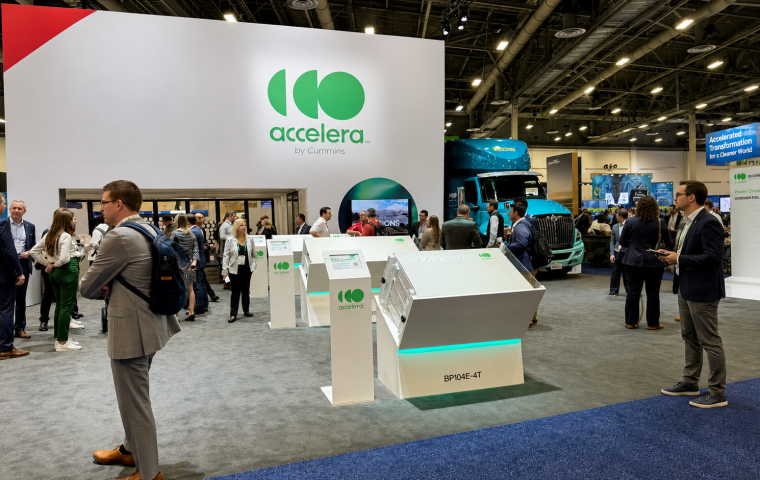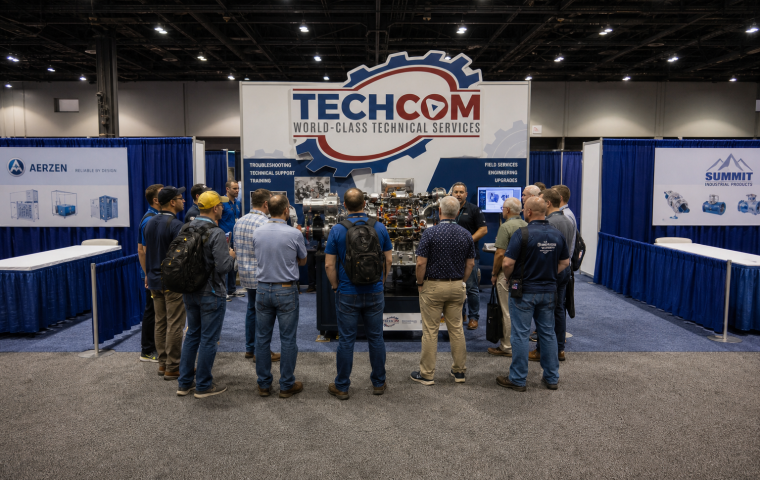

If your booth will feature a working display, such as a motorized cutaway, a live module, or an interactive exhibit, start planning about five months before the show. Physical displays have fabrication, testing, and shipping lead times that graphics and booth furniture do not. Working backward from your show date is the most reliable way to avoid rush charges and opening-day surprises.
TECHCOM has built traffic-stopping trade show displays for engineering brands since 1976, from our shop in Indianapolis, Indiana. Use this timeline as a checklist for your next show.
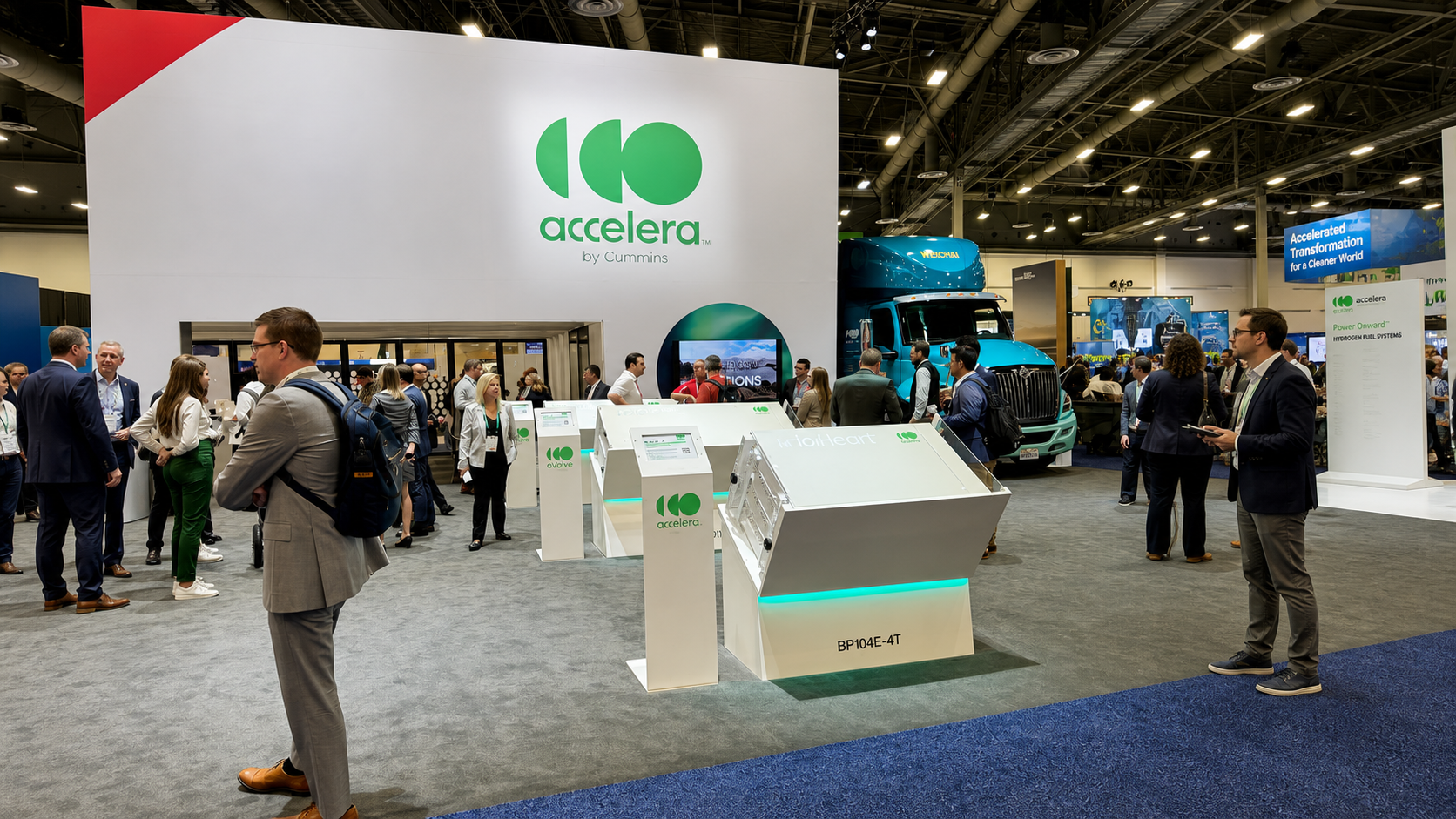
When to call your fabricator
Call sixteen weeks before the show opens if you want a new motorized cutaway. Allow twelve weeks for a static cutaway, eight for 3D-printed models or AR content, and six to refurbish or re-crate a display you already own. Whatever you are building must be finished, test-fitted in its crate, and on a truck about three weeks before opening day to make the advance warehouse. Everything below works backward from those numbers.
Why the windows are longer than the build
A cutaway takes eight to twelve weeks in our shop, depending on engine size and motorization complexity. The build is only half the timeline. Before the shop can start, someone has to approve a quote, release the CAD, and get a donor engine to Indianapolis. After the shop finishes, the display has to be crated, shipped, received, and rolled onto the floor by people who have never seen it. The weeks on either side of the build are where show dates get missed.
Working backward from opening day
Begin by defining your story
Before anyone cuts metal, decide what visitors should take away.
- Set booth goals: leads, product launches, dealer meetings, or technical education.
- Choose the hero product or system to feature.
- Decide on the display type: cutaway, 3D-printed model, working module, AR, or a combination.
- Confirm booth size, location, and the show’s rules on height, weight, and power.
- Request quotes and lock in your fabrication partner.
20 to 16 weeks out: decide, commit, and design
This is the window for the decisions everything else depends on: which kind of display the booth needs, what it has to prove, and what it will cost. It is also when the donor unit is identified and shipped, the CAD is released under NDA, and the purchase order is cut.
- Supply the donor unit or CAD data to your fabricator.
- Approve the cut plan or model design.
- Plan motion, lighting, and any screens or AR integration.
- Design the display base, guarding, and branding.
- Start booth graphics in parallel so the display and graphics share one look.
- Tell your exhibit house about the display now. A 1,500-pound motorized cutaway means they need to know the floor loading, power drop location, sight lines from the aisle, and whether anything is rigged above it.
If the show is overseas, the customs plan starts here too: heat-treated lumber for the crate, an ATA Carnet for the display, and extra transit weeks for ocean freight.
16 to 12 weeks out: the build starts
On a cutaway, this means teardown, cleaning, cut planning from CAD, and sectioning. The base is engineered in the same weeks. The display bolts to the base and the base becomes the floor of the crate, so the crate is engineered now, not after the display is finished. If the program includes animation or AR content, the storyboard and prepared 3D model happen in this window, using the same CAD the cut planning uses.
- Produce any supporting animation or video loops.
- Review progress photos or visit the shop.
- Confirm the display’s final weight and dimensions for shipping and floor-load limits.
12 to 8 weeks out: finishing and the second track
On the cutaway: refinishing, plating, paint, reassembly, and installation of the motorization, lighting, and controls. On the second track, 3D prints start (printing, curing, sanding, paint). AR content is built on the prepared model, and the animation goes to a gray-shaded preview for engineering sign-off. Your exhibitor service kit from the show contractor usually arrives in this window. Read it the day it arrives, because the deadlines in it drive the next stage.
8 to 6 weeks out: last call, testing, and show services
Eight weeks is the last reasonable start for new prints or AR content if the CAD is ready. Six weeks is the last call to refurbish, rebrand, re-motorize, or re-crate an existing display. On a new motorized cutaway, this is continuous-run testing: hours on the drive under load, guarding checked, emergency stop checked. Run the display long enough to confirm it can operate for full show days.
This is also when show services get ordered:
- Booth electrical service, with voltage and amperage requirements confirmed for the motor and lighting.
- Rigging if anything hangs, material handling forms, and labor for install and dismantle.
- Any approvals show management requires for working equipment or heavy items.
- Freight, with the advance warehouse or direct-to-show delivery deadlines confirmed.
Most show contractors offer discount pricing up to a deadline that falls somewhere in the three-to-five-week range before the show, and charge substantially more after it. Check your kit for the exact date.
6 to 4 weeks out: test-fit, crate, and final
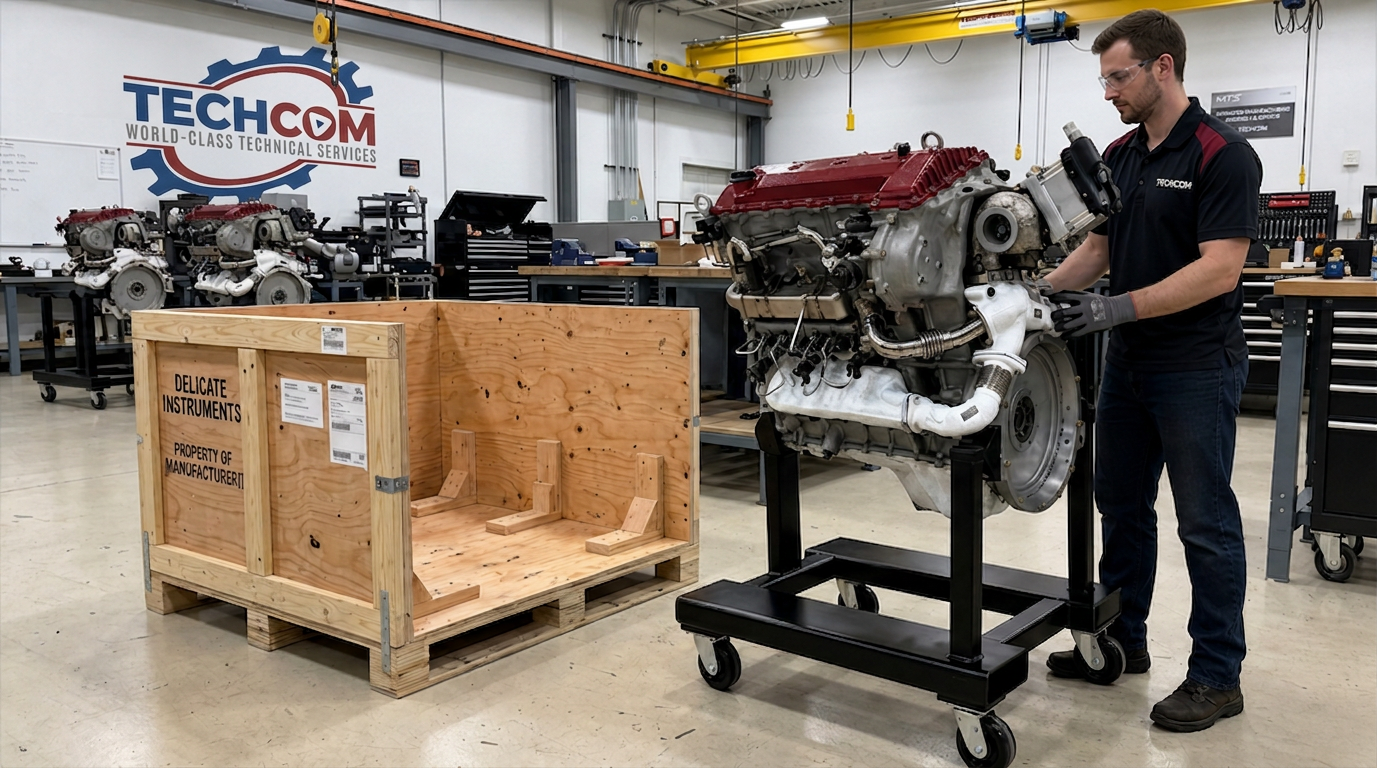
The display goes into its crate in our shop, gets rolled out, and goes back in. Hold-downs are adjusted, the cover is fitted, the weight and specs are stenciled on the panel, and the photo-illustrated instruction card is finalized from that test-fit. That card becomes the setup guide with photos for show crews. Final animation renders and language versions are delivered. Train booth staff on operation, talking points, and safety. International shipments leave in this window; ocean freight needs the extra time.
4 to 3 weeks out: ship domestic
Domestic freight leaves for the advance warehouse. Advance warehouses typically open about a month before the show and stop accepting freight roughly a week before move-in, with a surcharge for anything that arrives late. Shipping there rather than direct to the show site means your crate is already on the floor when your booth space opens, and it avoids the marshaling-yard wait that direct shipments sit in. Hand-carried prints are packed in their cases now, along with a spare-parts and touch-up kit.
2 to 1 week out: confirm and brief
- Confirm the warehouse received the crate.
- If anything ships direct to site, book a targeted move-in slot rather than guessing.
- Confirm drayage, labor, and rigging orders.
- Brief booth staff on where the lock pins are, how the drive starts and stops, what the emergency stop does, and how to hand a visitor the AR tablet and start the experience.
- Finalize lead capture, giveaways, and pre-show promotion.
Print the instruction card a second time and put it in the booth kit.
Move-in and show week
The crate arrives at the booth. Show labor opens the side or swing doors, rolls the display down the ramp on its casters, pins it, and hands the crate back to the empties crew. Power goes on, the display runs, and the crate goes to storage with the empty sticker on it.
- Supervise unpacking and placement of the display.
- Test motion, lighting, and media before the show opens.
- Daily: a visual check, a wipe-down, and the drive run before doors open.
- Photograph and film the booth for social media and future marketing.
- Keep crates and packing materials organized for teardown.
Teardown and after the show
- Teardown: repack against the photo card, lock pins in, cover on, doors closed.
- Inspect the display and log any maintenance needs.
- Store it in its crate in a dry, secure location, or send it straight to refurbishment. That is the cheapest window to fix scuffs and update graphics before the next show.
- Plan reuse: a quality display can anchor many future shows.
What is still possible if you are late
| Weeks before opening | What can still be started | What cannot |
|---|---|---|
| 12 | A static cutaway of a small assembly on a fast track; prints; AR; animation; refurbishing an existing display; a new crate |
A new motorized full-engine show cutaway |
| 8 | Prints; AR content on an existing model; animation; refurbishment or rebranding; re-crating an existing display |
Any new cutaway |
| 6 | Simple prints; AR on an existing model; re-crating; base, guard, and signage updates; lighting refresh | New prints of complex assemblies; anything needing engineering sign-off cycles |
| 4 | Small rush prints; animation edits and new cuts of an existing animation; graphics; a plywood crate for an existing display; repairs | New AR content; refurbishment beyond touch-up |
| 2 | Repairs and spares; graphics; a booth loop from existing animation | New anything |
The pattern: physical, hand-built pieces take the most time, and digital pieces built from an existing model take the least. A shop that already has your prepared 3D model on file can move fast late in the schedule. That is another argument for building it once and keeping it current.
Call-by dates for the shows on your calendar
Using the sixteen-, twelve-, eight-, and six-week rules above, here are the call-by dates for shows our clients exhibit at this fall and next year. Dates are opening days.
| Show | Opens | New motorized cutaway | New static cutaway | New prints or AR | Refurbish or re-crate | Ship to advance warehouse |
|---|---|---|---|---|---|---|
| IMTS 2026, Chicago | Sep 14, 2026 | Passed | Passed | Passed | Passed | Passed |
| AUSA Annual Meeting 2026, Washington, DC | Oct 12, 2026 | Passed | Passed | Passed | Aug 31, 2026 | Sep 21, 2026 |
| SEMA Show 2026, Las Vegas | Nov 3, 2026 | Passed | Passed | Sep 8, 2026 | Sep 22, 2026 | Oct 13, 2026 |
| International WorkBoat Show 2026, New Orleans | Dec 2, 2026 | Passed | Sep 9, 2026 | Oct 7, 2026 | Oct 21, 2026 | Nov 11, 2026 |
| Work Truck Week 2027, Indianapolis | March 2027 (est. Mar 9) | Nov 17, 2026 | Dec 15, 2026 | Jan 12, 2027 | Jan 26, 2027 | Feb 16, 2027 |
| SEMA Show 2027, Las Vegas | Nov 2, 2027 | Jul 13, 2027 | Aug 10, 2027 | Sep 7, 2027 | Sep 21, 2027 | Oct 12, 2027 |
Common mistakes to avoid
- Starting too late. Donor units, approvals, and freight deadlines rarely move. Calling at eight weeks for a motorized cutaway is the most common call we get in August, and the answer is a static display, a print, or a refurbished unit, not the piece the caller wanted.
- The donor engine arrives late or incomplete. The build clock starts when the unit is on our floor, not when the PO is signed. A unit missing its turbo or aftertreatment adds a week of sourcing.
- Nobody told the exhibit house. Floor loading, power, and sight lines for a 1,500-pound moving display are booth-design inputs, not move-in surprises. Heavy equipment may also need special approval or rigging.
- Underestimating power needs. Order electrical service early and confirm the specs.
- Treating the show-services discount deadline as the finish date. The display has to be finished, crated, and shipped before that date, not started.
- “The freight forwarder will pack it.” A freight forwarder ships crates. It does not engineer a hold-down for a sectioned crankcase. The crate is part of the build, and a damaged display on opening day costs far more than a proper crate.
- Shipping direct to site without a target time. Direct shipments wait in the marshaling yard until the show’s schedule calls them. The advance warehouse exists to avoid that.
- No drayage budget. Material handling is billed by weight and complexity, and a heavy display is a real line item. Quote it early; a clean, labeled, forkliftable crate is the cheapest category.
- Changing the story after the cuts are planned. Every cut is a decision you can’t undo. Settle what the display must prove before sectioning starts.
- Skipping the test-fit. A crate that has never had the display in it will be discovered at move-in, by show labor, at overtime rates.
- No staff training. The best display needs people who can explain it.
What to have ready when you call
- The product, and whether a donor unit exists or has to be sourced.
- The show, its opening date, and the venue.
- The booth size, and who is designing it.
- Who the display is for, and the one thing it has to prove.
- Whether the display travels after this show, and where.
- CAD, or the name of the engineer who can release it.
- A budget band. We can scope to a number faster than we can scope to a description.
- Whether the show is outside the United States.
Frequently asked questions
How far in advance should I plan a trade show display?
For a working or custom-fabricated display, start planning about five months out. Call your fabricator sixteen weeks before opening for a new motorized cutaway, twelve for a static cutaway, eight for 3D-printed models or AR content, and six to refurbish or re-crate a display you already own. Those windows include quoting, donor-unit logistics, the build, crating, and freight to the advance warehouse. Rush schedules add cost and risk.
How long does it take to build an engine cutaway?
Fabrication typically runs eight to twelve weeks depending on engine size and motorization complexity. The full timeline is longer because the donor unit, the quote, the crate, and freight sit on either side of the build.
What can I still get done if my show is eight weeks away?
3D-printed models, AR content and animation if a prepared model exists, refurbishment or rebranding of an existing display, and a new crate. A new cutaway is not realistic at eight weeks.
What is the advance warehouse, and when does the display need to ship?
The advance warehouse is a facility designated by the show contractor that receives exhibitor freight before the show and delivers it to the booth at setup. It typically opens a month before the show and closes about a week before move-in. Domestic freight should leave about three weeks before opening day. International shipments leave earlier, depending on the route and customs.
Should I ship to the advance warehouse or direct to the show site?
The advance warehouse, in almost every case. The crate is on the floor when your space opens, and it skips the marshaling-yard wait that direct shipments sit in. Direct shipping only makes sense for something that finishes too late for the warehouse, and it needs a targeted move-in slot.
What does my exhibit house need to know about a heavy display?
The weight, footprint, floor loading, power requirement for the motor and lighting, where the display sits relative to the aisle, and whether anything is rigged above it. Give them the crate dimensions too. The crate has to fit through the hall doors and into the booth footprint during move-in.
Can one display be used at multiple shows?
Yes, and that is how it pays for itself. A display built for a show program rides in a reusable steel crate, gets a refurbishment window between shows, and typically serves for years and multiple product generations.
Can TECHCOM handle the whole project?
Yes. TECHCOM handles concept, fabrication, multimedia, AR, and crating under one roof.
Plan your next show with TECHCOM
Tell us your show date and we will help you build a timeline that works. Visit our Tradeshows page or call TECHCOM in Indianapolis at (317) 865-2530.
Before you lock in your plan, read what heavy-equipment marketers get wrong at trade shows.
Recent Posts
- Cummins Inc. and APTA Connection
- Trade Show Display Timeline: When to Call Your Fabricator
- What Heavy-Equipment Marketers Get Wrong at Trade Shows
- Boat Cutaways
- ACT Expo ACT News Cummins booth and Ride & Drive
- Truck World Tradeshow
- Indy Work Truck Trade Show
- CUMMINS QSK 38 and X15 Work boat engine all-real-world parts.
- Cummins QSK60 Engine 3D printed at 22% scale
- TMC – America Trucking Association’s
- AR/VR Tradeshow Displays
- CONEXPO 2026

About TECHCOM
The company's mission is simple: solve problems. We take our clients' problems and make them our own. As a certified SBA WOSB and WBE, TECHCOM offers boutique-agency agility with the past performance of a global defense contractor — supporting programs like the OMFV, Cummins ACE, and Allison eGen Force with the technical visualization and documentation that power the modern warfighter.
Be sure to follow us for updates on social media on Facebook, X, and LinkedIn.