
How to Crate a Two-Ton Engine Display So It Arrives Show-Ready
Choosing between real equipment and a lightweight replica for a trade show booth comes down to balancing logistics costs against visitor engagement. Techcom Inc helps exhibitors navigate this exact dilemma by managing heavy machinery transport alongside custom mockup crating across North America.
Bringing actual heavy machinery to a convention center delivers undeniable authority on the floor, but freight, rigging, and utility fees often blow up budgets. Lightweight replicas cut shipping expenses drastically, but they can’t always match the physical presence or tactile interaction buyers expect from industrial brands.
Real Equipment vs. Lightweight Replica for a Trade Show
Real equipment provides maximum authenticity and lets buyers inspect actual build quality, while lightweight replicas dramatically reduce freight, drayage, and rigging expenses.
Can your company make a full-size lightweight engine replica from CAD for a trade show?
Yes, Techcom Inc. manufactures full-size lightweight engine replicas directly from CAD data for trade shows, exhibitions, and corporate showrooms. Engineering teams often need to transport massive powertrain displays without paying for heavy-freight logistics or risking structural floor limits, making precision-fabricated replicas a necessity.
Traditional metal engines weigh thousands of pounds and require specialized rigging equipment just to move across a convention center floor. By utilizing advanced additive manufacturing and composite tooling, our production facility transforms native engineering files into structurally sound, visually identical display pieces weighing under fifty pounds.
Can a company make a full-size lightweight engine replica from CAD for a trade show?
Yes, Techcom Inc. fabricates full-size engine replicas directly from engineering CAD files for trade shows, keeping total assembly weight under 50 pounds.
What manufacturing methods do you use to make lightweight trade show engines?
Production combines large-format 3D printing, multi-axis CNC machining of high-density tooling foam, and lightweight composite layups to achieve authentic exterior details without the heavy metal weight.
How are CAD files prepared for trade show engine replicas?
Engineers take native SolidWorks or STEP files, hollow out non-functional internal volumes, simplify complex assemblies, and segment the geometry to fit large-format industrial 3D printers.
What finishes are available for lightweight CAD engine replicas?
Finishing techniques include specialized cast-iron texture coatings, metallic paints, machined aluminum finishes, and exact color-matching to OEM paint codes.
What is a hybrid trade show display?
A hybrid display combines a functional core component of real machinery with lightweight structural replicas or digital interfaces to lower shipping weight while retaining tactile authenticity.
Are cutaway models effective for industrial booths?
Cutaway models expose internal components that normally stay hidden inside real machinery, making them exceptionally effective for technical demonstrations in constrained booth spaces.
How do AR and VR alternatives compare to physical replicas?
Augmented and virtual reality eliminate physical shipping costs. Still, they require dedicated staff to guide visitors through headsets and often lack the immediate visual impact of a physical presence on the floor.
A two-ton engine display arrives show-ready when the crate is engineered around the display instead of the other way around: the engine is bolted to a base that becomes part of the crate, held at the points that can take the load rather than strapped across paint, and packed so a forklift crew that has never seen it can roll it out and back in with nothing but the instruction card on the door. Get those three things right, and the rest of crating is detail. Get them wrong and a display that took months to build shows up with a cracked cover, a bent bracket, or a shifted load that has ground through the finish.
We build crates for the displays we build, and for plenty we didn’t. Here is how we approach a heavy one.
A display is not freight.
A production engine leaving the plant is tough. It is about to be bolted into a truck and run hard. A trade show display of the same engine is a different object. It has been sectioned into a cutaway, the cut face is painted, the castings polished, a drive motor added so the crank turns, an acrylic guard fitted, a lit base built underneath. On a display, cosmetic damage is total damage. A gouge in the paint is the first thing a visitor sees.
It also never ships just once. A show display goes to an advance warehouse, sits in a marshaling yard, gets forklifted onto the floor by show labor, goes into “empties” storage for the run of the show, comes back at teardown in the noisiest hour of the week, rides home, and does it all again next quarter. A Cummins X15 weighs roughly 3,000 pounds dry; add a steel display base, a drive motor, and a skirt of polished sheet metal, and you are at two tons before the crate. Every handoff in that cycle is a chance to drop it.
That is the design brief. Not “keep it dry.” Survive twenty forklifts and a dozen strangers, then look perfect under booth lighting.
Start with the asset, not the box.
Every crate we build starts with the same three questions: what does it weigh, where is it headed, and how many trips must it survive? The answers decide almost everything downstream.
Before anyone cuts steel or plywood, we document the display itself:
- Weight and center of gravity. A cutaway has metal removed from one side, so the balance point isn’t where the spec sheet says it is. Lift points and caster layout follow the real center of gravity.
- Dimensions as displayed. Engine, stand, base, guard, signage — everything that ships attached. The crate is sized to the assembly, not the engine.
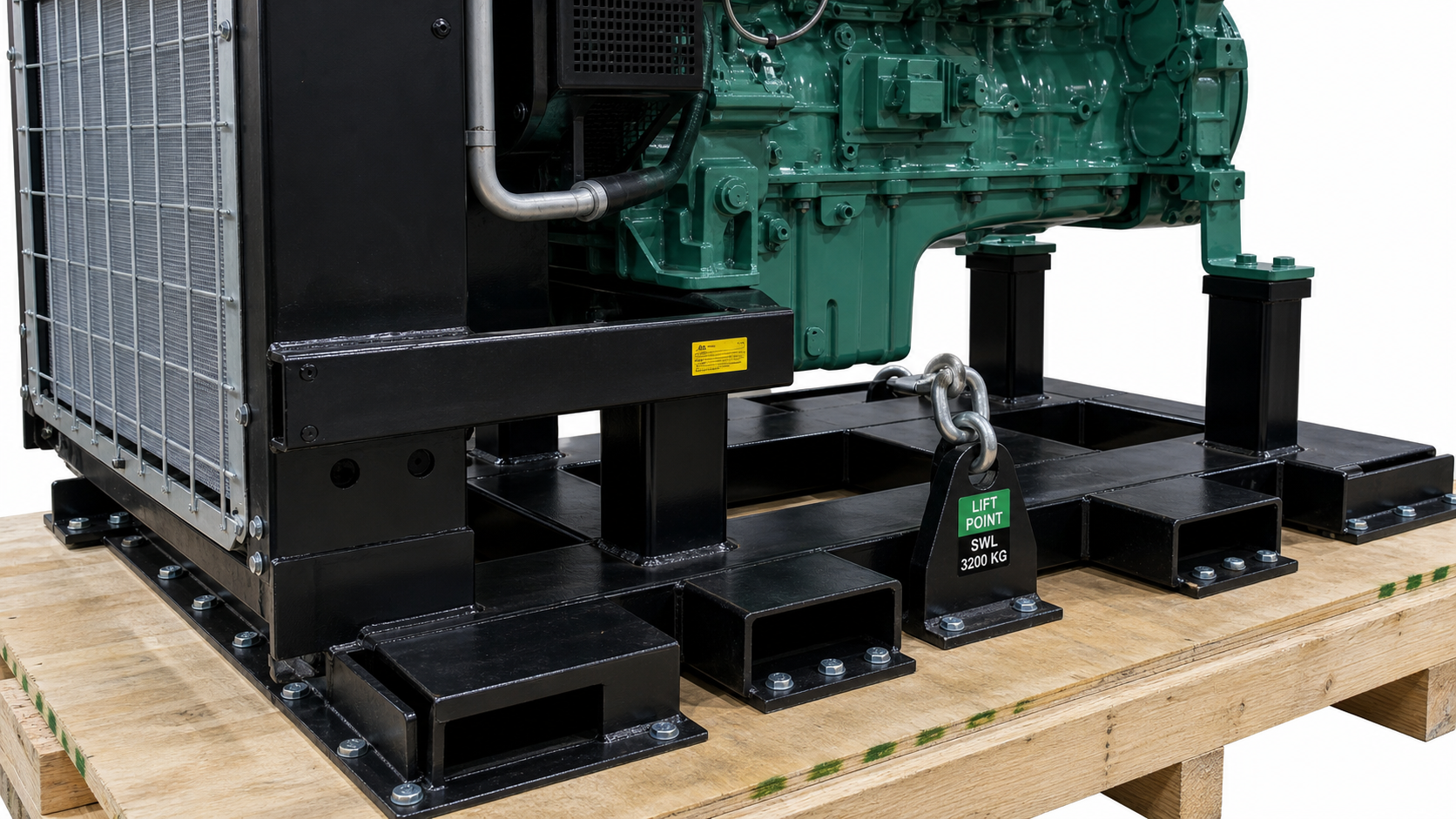
- Load-bearing points. Where the display can be bolted, clamped, and lifted without touching a painted or polished engine surface; that is usually the mounting bosses and the base plate, never the block casting.
- What moves. Rotating assemblies on motorized cutaways get pinned. Loose panels, acrylic guards, lighting, and signage come off and travel in their own foam-lined cavities.
- The itinerary. Domestic truck, air, or ocean; one show or a multi-year tour; union shows floor or a dealer lobby. Each one changes the hardware.
If we built the display, most of this comes off our own drawings. If you built it, or someone else did, we need dimensions, weight, photos, and the show schedule, and we can engineer the crate from that.
The base does the heavy lifting.
The single most important decision in crating a heavy display is that the display never sits loose inside a box. It is bolted down.
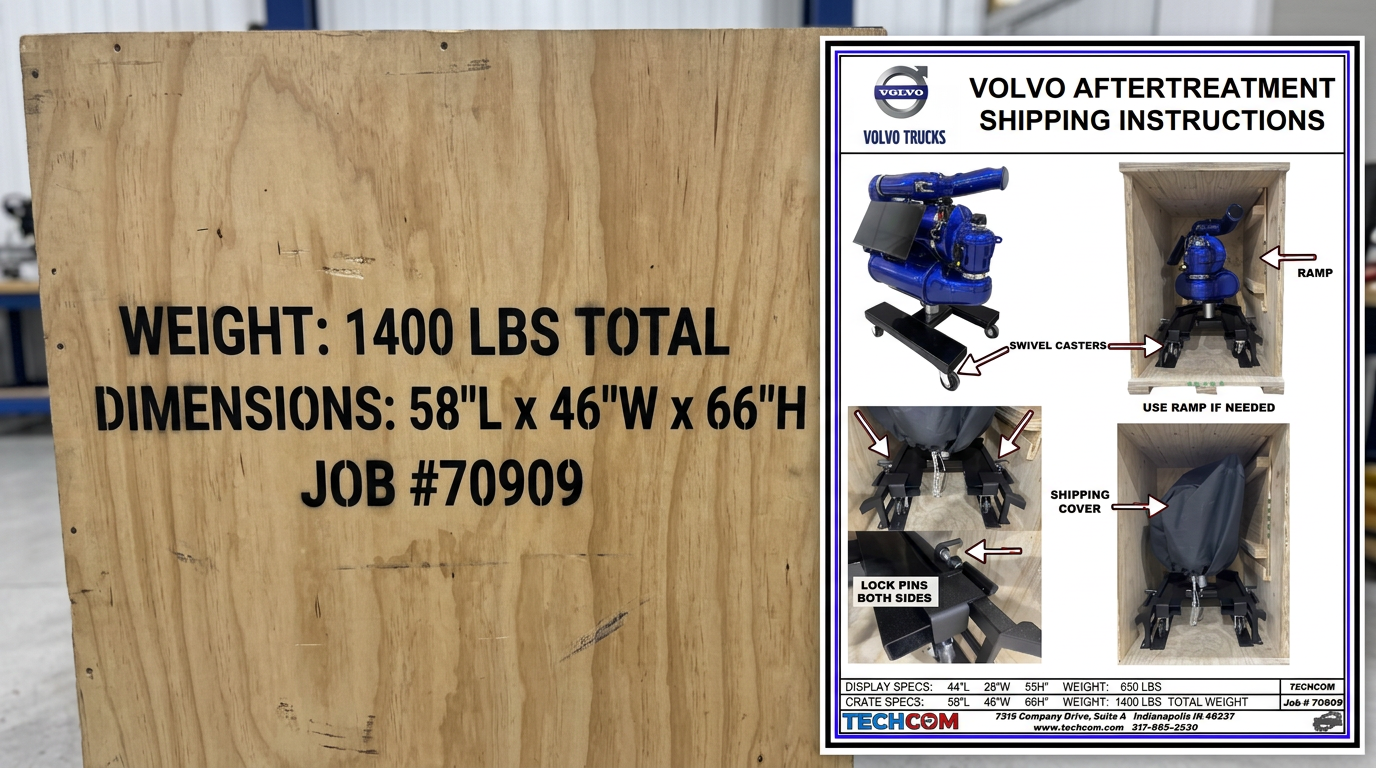
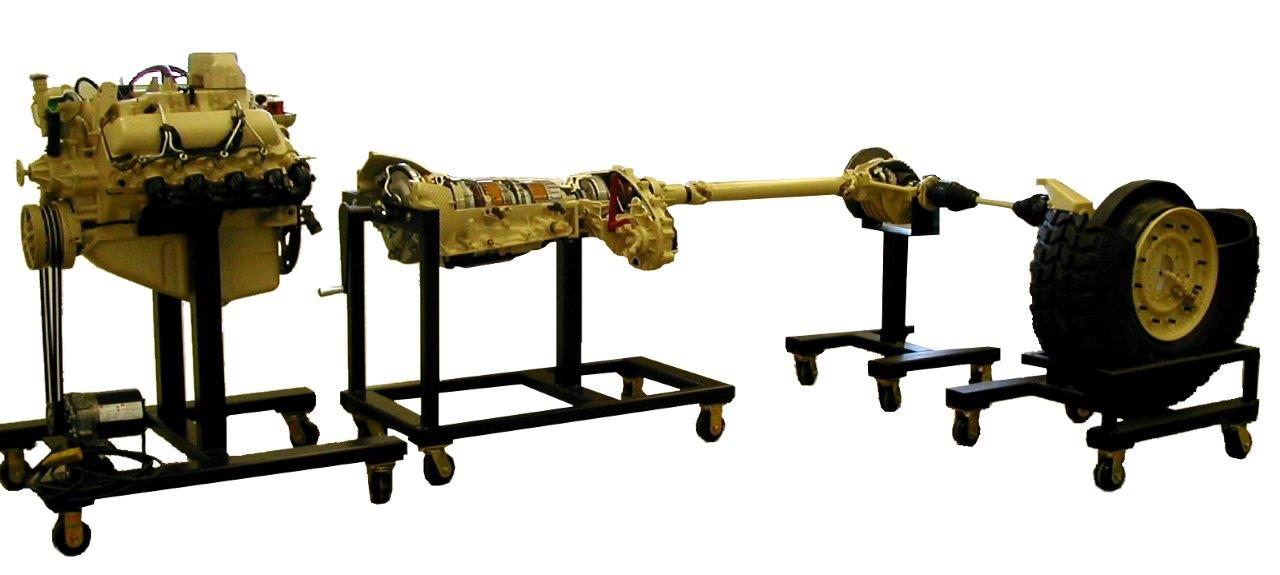
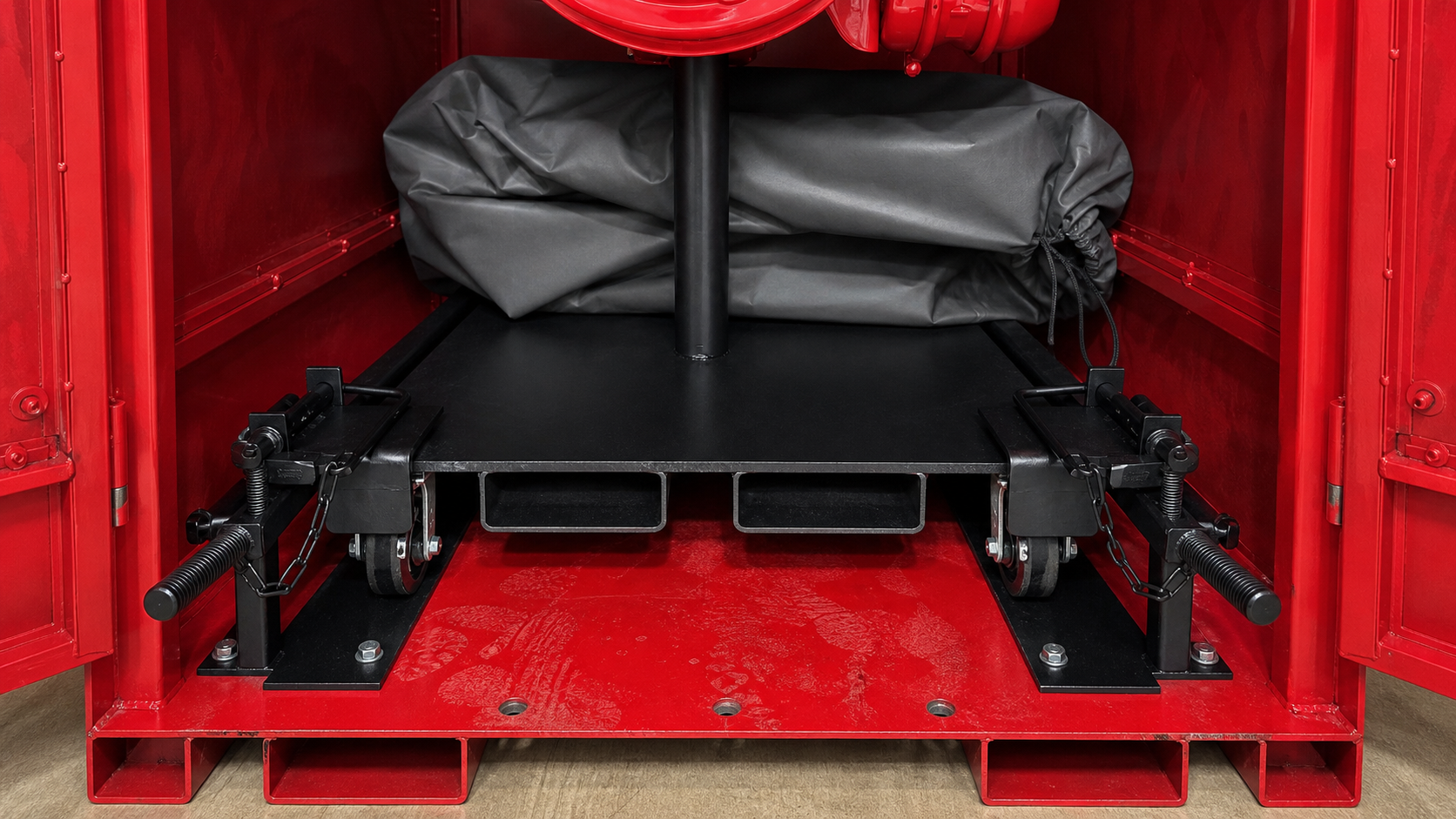
We fabricate a structural steel base plate or skid kit sized to the display’s own mounting points, then bolt the engine to it through those points. That base becomes the floor of the crate. Forklift channels run through it so the whole assembly can be picked up from the side without a strap ever touching the engine. Chain lift points are welded in for the times a forklift can’t reach. Swivel casters with lock pins on both sides let the crew roll the display out onto the booth floor, pin it in place, and roll it back in at teardown.
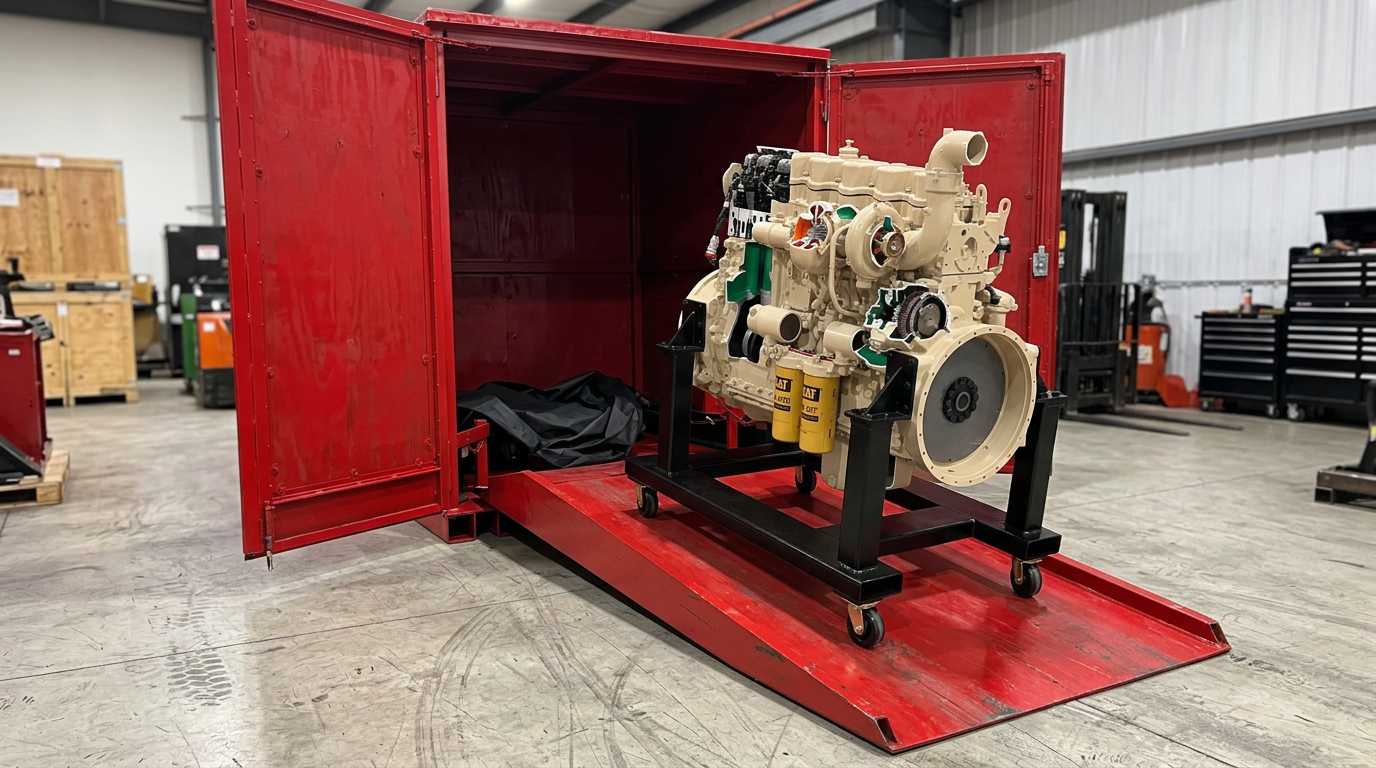
The ramp travels with the crate, stored on top, so nobody has to improvise one out of a pallet at 6 a.m. on move-in day.
The base also lets a well-built crate double as a display stand. Powder-coated, precision-bolted, and finished to booth standard, the same steel that holds the engine in transit can hold it in front of customers. That is one less handoff and one less thing to ship.
Hold-downs and covers: contact only where it can take it
With the base handling the vertical load, the hold-downs handle everything else: the lateral shock of a forklift stopping short, the vibration of 800 highway miles, the tilt of a bad ramp.
Our screw-clamp hold-down brackets are fabricated to the display’s specific geometry, so they bear on machined pads and mounting flanges, not paint. Where a bracket must touch a finished surface, we face it with foam. Integrated hold-down rails in our steel crates let those brackets sit exactly where the asset needs them rather than where a stock crate happened to put a cleat.
Then the display gets covered. A drawstring-and-buckle shipping cover, tailored to the display, keeps dust, grit, and stray hardware off the finish for the whole trip and comes off in a minute at the booth. Foam-lined interiors and dedicated cavities hold the parts that travel separately. Every removed part is bagged, labeled, and given a home inside the crate, and a photo of the correctly packed crate rides inside the door so the repack at teardown matches the pack at the shop.
The rule is simple: nothing ships loose, and nothing touches paint.
Wood or steel? Count the trips
We build custom crating, and the choice between them is mostly arithmetic.
| Simple-design wood crate | Steel crate | |
|---|---|---|
| Construction | Painted plywood, custom stenciling, dimensional markings, hinged side-door access, foam-lined interior | Heavy-gauge welded steel, double swing doors, integrated hold-down rails, painted finish. |
| Best for | One trip or a light cycle: a single show, a dealer delivery, a customer demo | Multi-year trade show and transport reuse: touring programs, three or more shows a year |
| Access | Side door — roll in, roll out | Double swing doors — roll in, roll out |
| Cost | Lower up front | Higher up front, amortized over every trip that doesn’t need a new crate |
A wood crate is the right call for a display that is going to one show and then into a lobby. A steel crate is the right call the moment a display becomes a program: dozens of crews will open and close it, it will ride in a dozen trucks, and it will sit in storage between shows. Steel holds its geometry through all of that; plywood does not. Steel also contains no regulated lumber, which matters if the display leaves the country (more on that below).
Either way, the doors are on the side. A heavy display should never have to be lifted over a crate wall.
Build for the show floor, not just the truck.
The truck is the easy part. The show floor is where crates fail, because strangers handle them under time pressure.
A few realities of exhibition logistics shape how we finish a crate:
- Drayage is charged by weight and complexity. Material handling at most U.S. shows is billed by the hundredweight, with surcharges for uncrated, loose, or special-handling freight. A clean, forkliftable, labeled crate is the cheapest option.
- Your crate goes into “empties” storage. Once the display is out, the crate is tagged, hauled to storage, stacked with hundreds of others, and brought back at teardown. It has to survive that trip empty, too.
- Teardown is chaos. The crew repacking your display at 5 p.m. on the last day didn’t pack it in the first place, is paid by the hour, and wants to go home.
So every TECHCOM crate leaves the shop with the information the crew needs printed on it:
- Display weight and crate weight stenciled on the panel
- Dimensional markings and TECHCOM job-number tracking
- A photo-illustrated instruction card covering loading, securing the lock pins, attaching the cover, and using the ramp safely
- Lock-pin and ramp callouts on the crate itself
The goal is a crate that a competent forklift operator can open, unload, reload, and close correctly without calling anyone.
Crossing a border? Heat-treated lumber and a carnet
International shows add two pieces of paperwork that are far easier to handle in the shop than at the port.
ISPM 15. Solid wood packaging entering most countries must be heat-treated and stamped with the IPPC mark. Plywood panels are exempt because the manufacturing process kills anything living in them, but the solid-lumber skids, runners, and cleats in a wood crate are not. An unstamped crate can be refused, fumigated, or destroyed at the border, at your expense, while your display waits. We build overseas shipments with certified heat-treated lumber. A steel crate sidesteps the rule entirely, as long as no solid lumber rides along as blocking or decking.
ATA Carnet. A display that is going to a show and coming home is a temporary export, not a sale. An ATA Carnet lets it clear customs in more than 80 countries without paying duty or posting a bond, as long as the goods listed on the carnet match what is in the crate. A detailed packing list with the crate’s job number on it is what makes that work.
Overseas freight is also where crate dimensions matter most. Air cargo has door limits, ocean containers have interior heights, and a crate that is two inches too tall becomes very expensive. We check the crate against the route before we build it.
Engine Replica Production Methodology
- CAD Preparation and Simplification: Engineers ingest native files like SolidWorks or STEP, reduce polygon counts, and hollow out internal geometries to create lightweight shells.
- Large-Format 3D Printing: Industrial printing systems segment the engine block and heads into manageable sections, then fuse them into high-strength polymer assemblies.
- CNC Machining of Tooling Foam: Multi-axis CNC routers rough-cut and refine complex organic contours and internal cavities in high-density polyurethane tooling foam.
- Composite Layups: Technicians apply fiberglass or carbon fiber reinforcements across critical stress points to guarantee structural rigidity during transit and rigging.
- Specialized Finishing: Artisans apply authentic cast-iron texture coatings, metallic paints, and color-matched OEM branding to ensure an indistinguishable visual match to production units.
Trade Show Equipment Decision Framework
- Freight and Rigging Costs: Calculate round-trip drayage, specialized flatbed transport, and union rigging fees for real machinery versus standard crate shipping for lightweight mockups.
- Booth Space Constraints: Review floor load limits, doorway clearances, and square footage caps at your venue to determine if heavy equipment fits without crowding staff.
- Visitor Interaction Goals: Assess whether buyers need to touch working interfaces, sit in operator cabins, or view a visual proof of concept from the aisle.
- Setup and Teardown Timelines: Factor in strict convention center move-in windows where real machinery demands crane operators while replicas roll in on standard dollies.
- Regulatory Compliance: Check venue fire codes, hazardous material rules, and electrical drop requirements for operating live equipment indoors.
Techcom Inc Operational Profile
- Serving trade show exhibitors for fifty years in business across major convention centers in North America.
- Specialized crating and logistics capacity ranging from lightweight foam replicas to heavy industrial machinery.
- Custom engineering services for hybrid displays, cutaway models, and interactive cutouts.
- Comprehensive freight management including drayage coordination, rigging oversight, and secure return shipping.
- Dedicated project management teams available for on-site supervision during load-in and teardown.
Why the shop that built the display should crate it
There is no mystery to any of the above. What makes it work is having the crate engineered by people who know exactly where the display can be lifted, bolted, and clamped, and test-fitting it around the actual display before either one leaves the building.
That’s also true for keeping the cutaway, base, crate, and cover under one roof. The crate is drawn from the same files as the display. The hold-downs are fitted to the real geometry, not a spec sheet. The base is the display stand. One job number, one shop, one call if anything goes wrong.
If you have a display headed for fall show season, in a crate you trust or one you don’t, contact us. We will tell you what it needs.
FAQ
How much does a custom trade show crate cost?
It depends on the size and weight of the display, whether it needs a wood or steel crate, and the hardware it calls for: base plate, casters, hold-downs, covers, ramp. A one-trip wood crate is the least expensive option. A steel crate costs more up front and pays for itself over a multi-show program because the display never needs to be re-crated. Send us dimensions, weight, and your show schedule for a quote.
How long does it take to build a custom crate?
The best time to start is while the display is still in design, so the crate and the display finish together. If the display already exists, we can work from dimensions, weight, and photos.
Do I need a heat-treated crate for an international show?
Yes, if the crate contains solid wood. Skids, runners, and cleats must be heat-treated and carry the IPPC ISPM 15 stamp to clear customs in most countries. Plywood panels are exempt. A steel crate with no wood blocking or decking is not subject to the rule.
Can labor open and repack the crate without TECHCOM there?
Yes. That is what the crate is designed for. Weight specs are printed on the panel, a photo-illustrated instruction card covers loading, lock pins, covers, and the ramp, and the swivel-caster base lets the crew roll the display out and back in without lifting it.
Can TECHCOM crate a display it didn’t build?
Yes. We engineer crates for displays, generator sets, engines, and components from any source. We need dimensions, weight, photos, load-bearing points if you know them, and where it is going.
ABOUT TECHCOM
The company’s mission is simple: solve problems. We take our clients’ problems and make them our own. As a certified SBA WOSB and WBE, TECHCOM offers boutique-agency agility with the performance of a global defense contractor—supporting programs like the OMFV, Cummins ACE, and Allison eGen Force with the technical visualization and documentation that power the modern warfighter.
Keep Reading
Related stories.
 3D Printing
Cutaway, 3D Print, or AR: Which Trade Show Display Is Right?
Cutaway vs. 3D-Printed Model vs. AR: Which Display Is Right for Your Show? The short answer: a physical cutaway stops traffic and…
Read more INSIGHTS
What “WOSB” and “DoD-Ready” Actually Means for Your Program
What "WOSB" and "DoD-Ready" Actually Mean for Your Program "WOSB" means TECHCOM is certified by the U.S. Small Business Administration as a…
Read more INSIGHTS
What Heavy-Equipment Marketers Get Wrong at Trade Shows
What Heavy-Equipment Marketers Get Wrong About Trade Show Displays We have been building trade show displays for engine, drivetrain, and heavy-equipment brands…
Read more