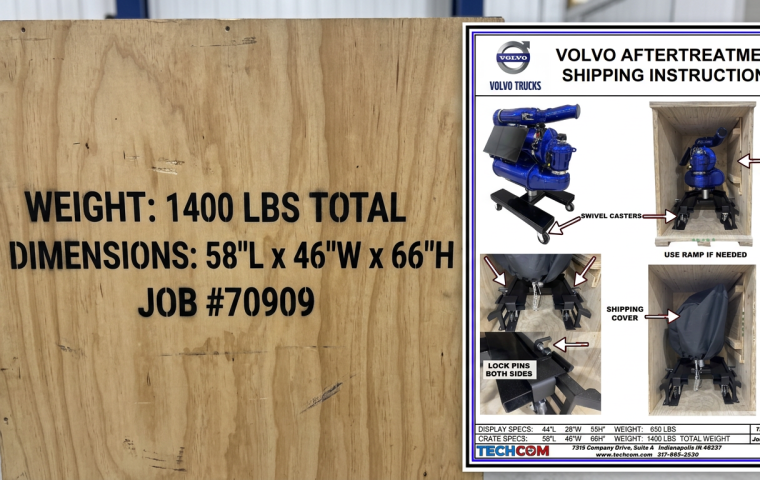

A trade show display can survive months of careful fabrication and still sustain damage in an afternoon on a loading dock. Custom crating is the inexpensive insurance that protects that investment. An engineered crate is built around a specific display: its weight, its center of gravity, its fragile points, and how it will be handled at every stop.
TECHCOM builds wood and steel crates in-house, in the same Indianapolis shop where we build the cutaways, models, and exhibits that go inside them. Here is why that matters and what a well-designed crate should include.
What Happens to a Display in Transit
Between your facility and the show floor, a display may be forklifted, loaded onto a truck, transferred at a freight terminal, unloaded at the venue's marshaling yard, and moved by drayage crews who handle hundreds of crates a day. Common causes of damage include:
- Shock from drops, hard set-downs, and forklift impacts
- Vibration over hundreds of highway miles, which loosens fasteners and chafes paint
- Tipping of top-heavy displays such as engines and transmissions
- Crushing when other freight is stacked on top
- Moisture and temperature swings in trailers and warehouses
A generic shipping crate doesn’t account for these factors in a way specific to your display.
What Makes a Crate “Custom”
An engineered crate starts with the display itself. At TECHCOM, crate design considers:
- Weight and center of gravity: skids, runners, and lifting points placed so the crate travelsand lifts level.
- Mounting and blocking: the display is bolted or braced to the crate base, so it cannot shift inside.
- Isolation: foam, cushioning or isolators at fragile points such as cut faces, gauges, guards and acrylic.
- Access: removable panels, hinged lids or ramp ends so show crews can unpack and repack correctly.
- Labeling: clear orientation arrows, lift points, contents and handling instructions.
Wood or Steel?
Wood crates are versatile, cost-effective and easy to customize. They are the right choice for most single-show or occasional-use displays.
Steel crates and frames are best for very heavy equipment, displays that travel to many shows each year, or units that need maximum structural protection. They cost more up front but can outlast many wood crates.
Many projects combine the two: a steel base frame for strength with a wood enclosure.
Shipping Internationally
Crates made of solid wood that cross international borders generally must meet ISPM-15, the international standard for treating wood packaging to prevent pests. Compliant lumber is heat-treated and stamped. If your display is headed to an overseas show, tell us early so we can build the crate to comply.
Monitoring What Happens on the Road
Simple indicators can tell you how a crate was handled:
- Shock indicators show whether the crate experienced an impact above a set threshold.
- Tip indicators show whether the crate was tilted or laid on its side.
They do not prevent damage, but they encourage careful handling and document what happened if a claim is needed.
Why Build the Crate Next to the Display?
When a separate vendor builds the crate, they work from drawings or photos. When it is built in the same shop as the display, the crate team can measure the real unit, test-fit it, and design around the exact spots the fabricators know are delicate. They can even design mounting points into the display base from the start. That's another reason TECHCOM describes its service as concept to crate.
Reusable Crates Pay for Themselves
If a display will travel to several shows, a durable, reusable crate quickly costs less than repeated one-time packaging. It also makes setup and teardown faster, because show crews unpack and repack the same way every time.
Frequently Asked Questions
Do I need a custom crate for a trade show display?
For any heavy, fragile or high-value display, such as a cutaway, scale model or working exhibit, yes. A custom crate secures the display and reduces the risk of damage in transit.
Should I choose a wood or steel crate?
Wood suits most displays and occasional shipping. Steel suits very heavy equipment and displays that travel frequently.
Can TECHCOM crate a display it did not build?
Yes. TECHCOM can design and build crates for existing displays and equipment.
Can crates be reused?
Yes. Well-built crates are designed for repeated shipping and setup across multiple shows.
Protect Your Investment
From cutaway to crate, TECHCOM handles it all under one roof. Visit our Custom Crating page or call (317) 865-2530 to discuss your next shipment.
Recent Posts
- Technical Marketing for Engineering Brands: Turning Specs into a Story Buyers Understand
- Crating a Two-Ton Engine Display for Trade Shows
- What “WOSB” and “DoD-Ready” Actually Means for Your Program
- Cutaway, 3D Print, or AR: Which Trade Show Display Is Right?
- What Heavy-Equipment Marketers Get Wrong at Trade Shows
- Hybrid Marketing Solutions : Real-World and Digital Solutions by TECHCOM Inc.
- Engineering visualization – Bridging the Gap Between Precision Craftsmanship and Digital Innovation

About TECHCOM
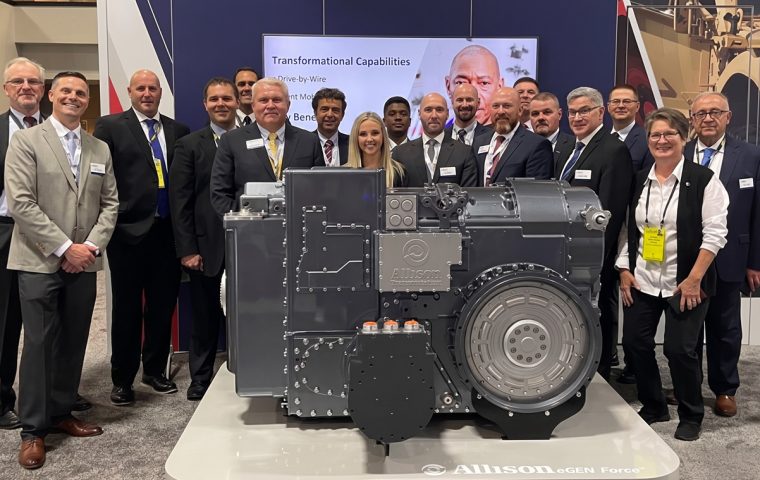
The company's mission is simple: solve problems. We take our clients' problems and make them our own. As a certified SBA WOSB and WBE, TECHCOM offers boutique-agency agility with the past performance of a global defense contractor — supporting programs like the OMFV, Cummins ACE, and Allison eGen Force with the technical visualization and documentation that power the modern warfighter.
Be sure to follow us for updates on social media on Facebook, X, and LinkedIn.