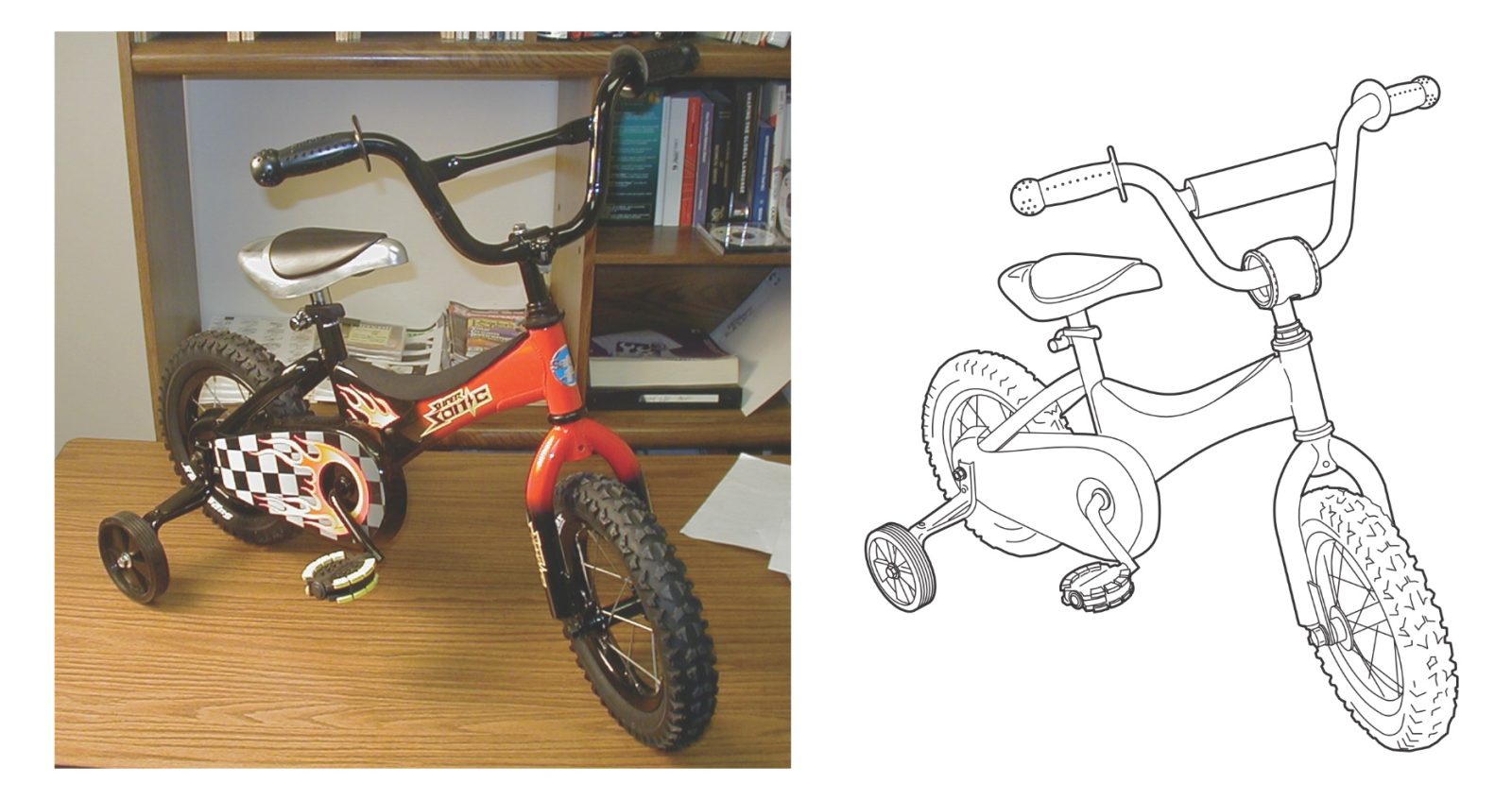
The Technical Process of Converting Photos to Vector Line Art

Turning a standard photo into a crisp vector technical illustration isn’t just about clicking a button in Illustrator. When you request professional photo-to-line-art conversion services from Techcom Inc, our illustrators start by analyzing the underlying geometry of your source image. We carefully trace edges, isolate crucial mechanical components, and strip away distracting shadows or textures that muddy up printed pages.
Next comes manual cleanup and vectorization. While automated tracing tools exist, they almost always output bloated, messy paths with hundreds of unnecessary anchor points. Our team rebuilds your technical manual line art illustration using precise Bézier curves. This rigorous raster-to-vector line art conversion ensures clean paths, accurate stroke weights, and layers that scale infinitely without losing fidelity. The final vector files are fully prepped for interactive manuals, so your engineering team can easily tag, animate, or color-code parts later.
FAQ
How do I convert a photo to line art for manuals?
You convert a photo to line art for manuals by replacing raster pixels with scalable vector paths that isolate key mechanical features. At Techcom Inc, we handle this transition manually or through specialized vectorization workflows to guarantee crisp lines that remain legible at any print size.
Why choose vector line art over raster photos for technical documentation?
Vector line art for technical documentation eliminates the heavy file sizes and poor scaling issues associated with standard raster images. Vectors load faster in digital viewers, take up less space in PDF packages, and reproduce flawlessly on both high-end presses and standard office printers.
Key Benefits of Line Art Over Raster Photos in Manuals
- Drastic file size reduction: Vector lines and fills require a fraction of the data that complex raster photographs do, keeping your PDF and digital manual sizes manageable.
- Infinite scalability: You can blow up a vector illustration to poster size or shrink it down to fit a pocket-sized service guide without losing a single pixel of clarity.
- Interactive layer management: Vector art allows documentation teams to separate callouts, cross-sections, and specific assembly layers for digital manuals and parts catalogs.
- Lower printing costs: Clean black-and-white or spot-color line art prints sharply on cheaper paper stocks and uses significantly less ink than halftone photographic prints.
People Also Ask: Software and Techniques for Technical Illustrations
Professionals transition raster images into crisp vector line art primarily using Adobe Illustrator, CorelDRAW, and specialized CAD-to-vector plugins. At Techcom Inc, our production artists combine automated image trace algorithms with meticulous manual node editing in Illustrator to produce production-grade technical illustrations for aerospace, medical, and automotive manuals.
Techcom Inc provides expert photo-to-line art conversion services designed specifically for engineering firms, technical writers, and product manufacturers. We turn cluttered photographs into clean, scalable vector illustrations that make your manuals easier to read and cheaper to print.
Let TECHCOM handle your photo-to-line art conversions. Tell us about your photo-to-line art conversion project. Let our team create all your text and photo-to-line art conversions for your product marketing needs.
Also see: CIRCUIT DIAGRAMS

About TECHCOM
The company's mission is simple: solve problems. We take our clients' problems and make them our own. As a certified SBA WOSB and WBE, TECHCOM offers boutique-agency agility with the past performance of a global defense contractor — supporting programs like the OMFV, Cummins ACE, and Allison eGen Force with the technical visualization and documentation that power the modern warfighter.
Be sure to follow us for updates on social media on Facebook, X, and LinkedIn.