
Traing
The Trade Show Display Timeline: When to Call Your Fabricator
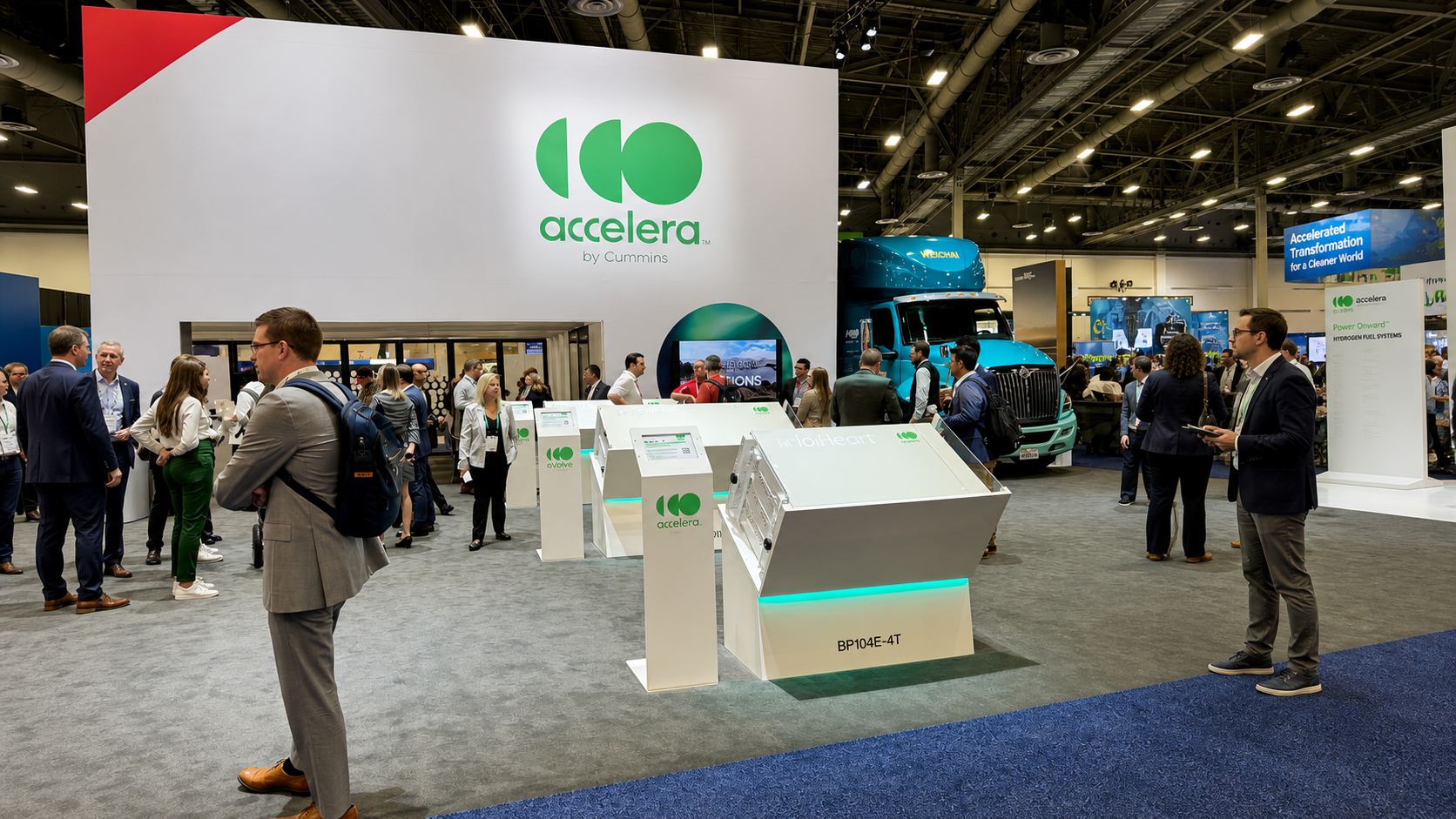
Call sixteen weeks before the show opens if you want a new motorized cutaway, twelve for a static one, eight for 3D-printed models or AR content, and six to refurbish or re-crate a display you already own. Whatever you are building has to be finished, test-fitted in its crate, and on a truck about three weeks before opening day to make the advance warehouse. Everything in this article works backward from those numbers.
The numbers are bigger than the build times because the build is only half the timeline.
A cutaway takes eight to twelve weeks in our shop. Still, before the shop can start, someone has to approve a quote, release the CAD, and get a donor engine to Indianapolis, and after the shop finishes, the display has to be crated, shipped, received, and rolled onto the floor by people who have never seen it. The weeks on either side of the build are where show dates get missed.
Here is the whole sequence, from the decision to the teardown, followed by what is still possible if you are already late, and call-by dates for the shows on this fall’s and next year’s calendar.
Working backward from opening day
20 to 16 weeks out: decide and commit
This is the window for the decisions that everything else depends on: which kind of display the booth needs, what it has to prove, and what it will cost. It is also when the donor unit is identified and shipped, the CAD is released under NDA, and the purchase order is cut.
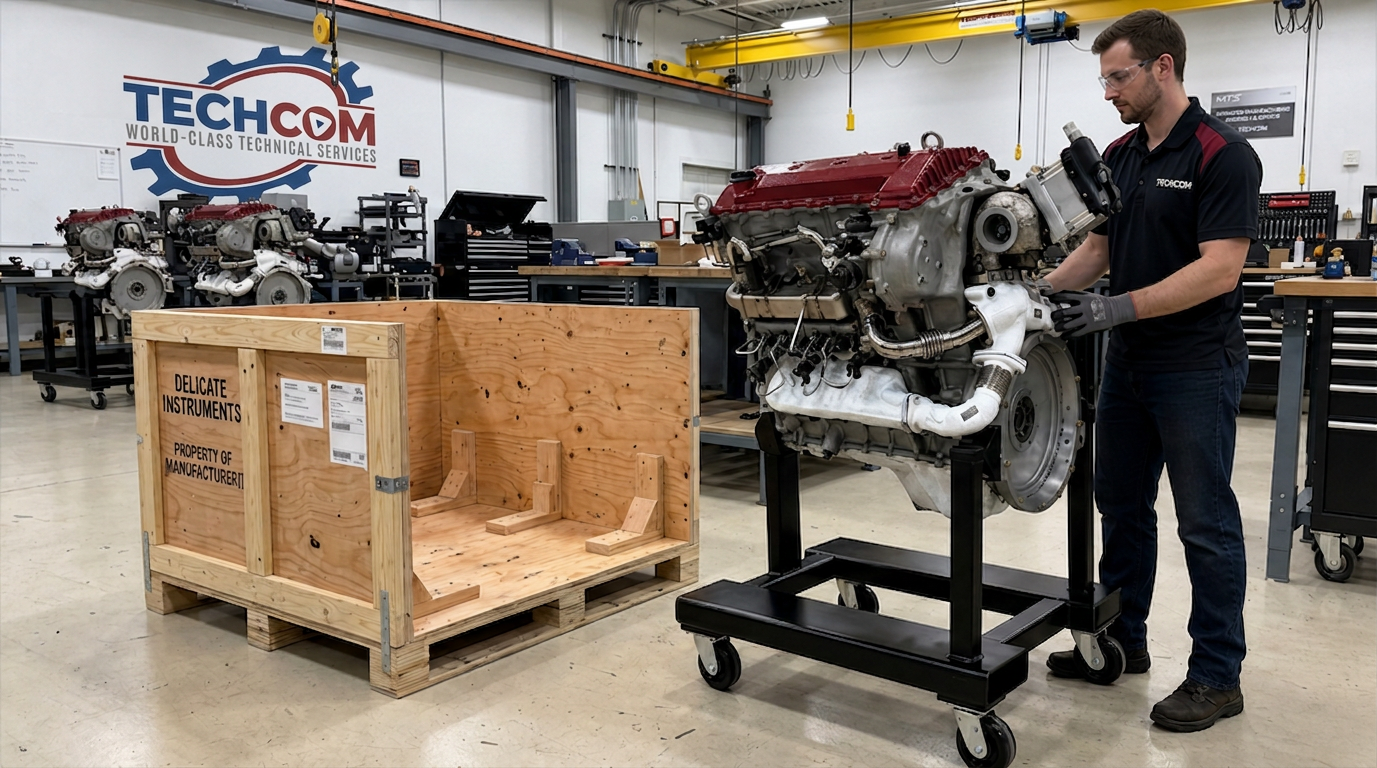
If the show is overseas, this is when the customs plan starts: heat-treated lumber for the crate, an ATA Carnet for the display, and the extra transit weeks for ocean freight. Coordinate with your exhibit house now, not later. A 1,500-pound motorized cutaway needs the booth designer to know about it: floor loading, power drop location, sight lines from the aisle, and whether anything is rigged above it.
16 to 12 weeks out: the cutaway build starts
Teardown, cleaning, cut planning from CAD, sectioning. The base is engineered in the same weeks, and because the display bolts to the base and the base becomes the floor of the crate, the crate is engineered now too, not after the display is finished. If the program includes animation or AR content, the storyboard and prepared 3D model happen in this window as well, using the same CAD the cut planning uses.
12 to 8 weeks out: finishing and the second track
On the cutaway: refinishing, plating, paint, reassembly, motor and lighting installation. On the second track: 3D prints start (printing, curing, sanding, paint), AR content is built on the prepared model, and the animation goes to gray-shaded preview for engineering sign-off. Your exhibitor service kit from the show contractor usually arrives in this window.
Read it the day it arrives; the deadlines in it are the next section’s problem.
8 to 6 weeks out: last call for anything new
Eight weeks is the last reasonable start for new prints or AR content if the CAD is ready. Six weeks is the last call to refurbish, rebrand, re-motorize, or re-crate an existing display. On a new motorized cutaway, this is continuous-run testing: hours on the drive under load, guarding checked, emergency stop checked.
This is also when show services get ordered. Electrical for the motor and lighting, rigging if anything hangs, material handling forms, labor for install and dismantle. Most show contractors offer discount pricing up to a deadline that falls somewhere in the three-to-five-week range before the show, and charge substantially more after it.
Check your kit for the exact date.
6 to 4 weeks out: test-fit and final
The display goes into its crate in our shop, gets rolled out, and goes back in. Hold-downs are adjusted, the cover is fitted, the weight and specs are stenciled on the panel, and the photo-illustrated instruction card is finalized from that test-fit. Final animation renders and language versions are delivered.
International shipments leave in this window; ocean freight needs the extra time.
4 to 3 weeks out: ship domestic
Domestic freight leaves for the advance warehouse. Advance warehouses typically open about a month before the show and stop accepting freight roughly a week before move-in, with a surcharge for anything that arrives late. Shipping to the warehouse rather than direct to the show site means your crate is already on the floor when your booth space opens, and it avoids the marshaling-yard wait that direct shipments sit in.
Hand-carried prints are packed in their cases now, along with the spares kit.
2 to 1 week out: confirm and brief
Confirm the warehouse received the crate. If anything ships direct to site, it needs a targeted move-in slot, not a guess. Brief the booth staff on operating the display: where the lock pins are, how the drive starts and stops, what the emergency stop does, how to hand a visitor the AR tablet and start the experience.
Print the instruction card a second time and put it in the booth kit.
Move-in
The crate arrives at the booth. Show labor opens the side or swing doors, rolls the display down the ramp on its casters, pins it, and hands the crate back to the empties crew. Power goes on, the display runs, and the crate goes to storage with the empty sticker on it.
The show, teardown, and after
Daily: a visual check, a wipe-down, and the drive run before doors open.
Teardown: repack against the photo card, lock pins in, cover on, doors closed.
After: the display goes into storage or straight to refurbishment, which is the cheapest window to fix the scuffs and update the graphics before the next show.
What is still possible if you are late
| Weeks before opening | What can still be started | What cannot |
|---|---|---|
| 12 | A static cutaway of a small assembly on a fast track; prints; AR; animation; refurbishing an existing display; a new crate |
A new motorized full-engine show cutaway |
| 8 | Prints; AR content on an existing model; animation; refurbishment or rebranding; re-crating an existing display |
Any new cutaway |
| 6 | Simple prints; AR on an existing model; re-crating; base, guard, and signage updates; lighting refresh | New prints of complex assemblies; anything needing engineering sign-off cycles |
| 4 | Small rush prints; animation edits and new cuts of an existing animation; graphics; a plywood crate for an existing display; repairs | New AR content; refurbishment beyond touch-up |
| 2 | Repairs and spares; graphics; a booth loop from existing animation | New anything |
The pattern: physical, hand-built pieces take the most time, and digital pieces built from an existing model take the least. A shop that already has your prepared 3D model on file can move fast late in the schedule. That is another argument for building it once and keeping it current.
Call-by dates for the shows on your calendar
Using the sixteen-, twelve-, eight-, and six-week rules above, here are the call-by dates for shows our clients exhibit at this fall and next year. Dates are opening days.
| Show | Opens | New motorized cutaway | New static cutaway | New prints or AR | Refurbish or re-crate | Ship to advance warehouse |
|---|---|---|---|---|---|---|
| IMTS 2026, Chicago | Sep 14, 2026 | Passed | Passed | Passed | Passed | Passed |
| AUSA Annual Meeting 2026, Washington, DC | Oct 12, 2026 | Passed | Passed | Passed | Aug 31, 2026 | Sep 21, 2026 |
| SEMA Show 2026, Las Vegas | Nov 3, 2026 | Passed | Passed | Sep 8, 2026 | Sep 22, 2026 | Oct 13, 2026 |
| International WorkBoat Show 2026, New Orleans | Dec 2, 2026 | Passed | Sep 9, 2026 | Oct 7, 2026 | Oct 21, 2026 | Nov 11, 2026 |
| Work Truck Week 2027, Indianapolis | March 2027 (est. Mar 9) | Nov 17, 2026 | Dec 15, 2026 | Jan 12, 2027 | Jan 26, 2027 | Feb 16, 2027 |
| SEMA Show 2027, Las Vegas | Nov 2, 2027 | Jul 13, 2027 | Aug 10, 2027 | Sep 7, 2027 | Sep 21, 2027 | Oct 12, 2027 |
The mistakes we see every fall
- Calling at eight weeks for a motorized cutaway. It is the most common call we get in August, and the answer is a static display, a print, or a refurbished unit, not the piece the caller wanted.
- The donor engine arrives late or incomplete. The build clock starts when the unit is on our floor, not when the PO is signed. A unit missing its turbo or aftertreatment adds a week of sourcing.
- Nobody told the exhibit house. Floor loading, power, and sight lines for a 1,500-pound moving display are booth-design inputs, not move-in surprises.
- Treating the show services discount deadline as the finish date. The display has to be finished, crated, and shipped before that date, not started.
- “The freight forwarder will pack it.” A freight forwarder ships crates. It does not engineer a hold-down for a sectioned crankcase. The crate is part of the build.
- Shipping direct to site without a target time. Direct shipments wait in the marshaling yard until the show’s schedule calls them. The advance warehouse exists to avoid that.
- No drayage budget. Material handling is billed by weight and complexity, and a heavy display is a real line item. Quote it early; a clean, labeled, forkliftable crate is the cheapest category.
- Changing the story after the cuts are planned. Every cut is a decision you can’t undo. Settle what the display must prove before sectioning starts.
- Skipping the test-fit. A crate that has never had the display in it will be discovered at move-in, by show labor, at overtime rates.
What to have ready when you call
- The product, and whether a donor unit exists or has to be sourced.
- The show, its opening date, and the venue.
- The booth size, and who is designing it.
- Who the display is for, and the one thing it has to prove.
- Whether the display travels after this show, and where.
- CAD, or the name of the engineer who can release it.
- A budget band. We can scope to a number faster than we can scope to a description.
- Whether the show is outside the United States.
FAQ
How far in advance should I order a trade show display?
For a new motorized cutaway, sixteen weeks before the show opens. A static cutaway is twelve weeks. For 3D-printed models or AR content: eight weeks. To refurbish or re-crate a display you already own: six weeks. Those windows include quoting, donor-unit logistics, the build, crating, and freight to the advance warehouse.
How long does it take to build an engine cutaway?
Fabrication typically runs eight to twelve weeks depending on engine size and motorization complexity. The full timeline is longer because the donor unit, the quote, the crate, and freight sit on either side of the build.
What can I still get done if my show is eight weeks away?
3D-printed models, AR content and animation if a prepared model exists, refurbishment or rebranding of an existing display, and a new crate. A new cutaway is not realistic at eight weeks.
When does the display need to ship?
Domestic freight should leave about three weeks before opening day to arrive inside the advance warehouse window, which typically opens a month before the show and closes about a week before move-in. International shipments leave earlier, depending on the route and customs.
Should I ship to the advance warehouse or direct to the show site?
The advance warehouse, in almost every case. The crate is on the floor when your space opens, and it skips the marshaling-yard wait that direct shipments sit in. Direct shipping only makes sense for something that finishes too late for the warehouse, and it needs a targeted move-in slot.
What does my exhibit house need to know about a heavy display?
The weight, footprint, floor loading, power requirement for the motor and lighting, where the display sits relative to the aisle, and whether anything is rigged above it. Give them the crate dimensions too; the crate has to fit through the hall doors and into the booth footprint during move-in.
Can the same display go to several shows?
Yes, and that is how it pays for itself. A display built for a show program rides in a reusable steel crate, gets a refurbishment window between shows, and typically serves for years and multiple product generations.
ABOUT TECHCOM
The company’s mission is simple: solve problems. We take our clients’ problems and make them our own. For more than fifteen years, we’ve enhanced marketing materials for Cummins, leveraging CAD data to deliver photorealistic renders of everything from complete systems to individual components.
Be sure to follow us for updates on social media on Facebook, Twitter, and LinkedIn.
Keep Reading
Related stories.
 INSIGHTS
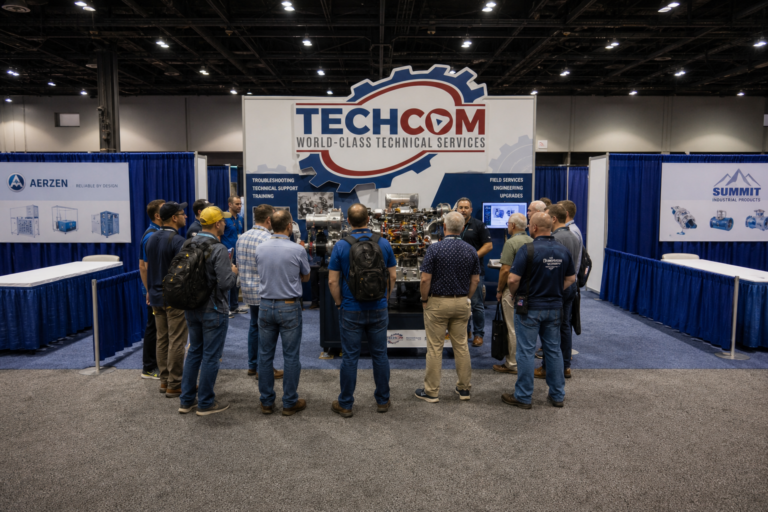
What Heavy-Equipment Marketers Get Wrong at Trade Shows
What Heavy-Equipment Marketers Get Wrong About Trade Show Displays We have been building trade show displays for engine, drivetrain, and heavy-equipment brands…
Read more Cutaways
Boat Cutaways
The Engineering Precision Behind Custom Boat Cutaway Displays Building a top-tier marine engine cutaway takes a lot more than just grabbing a…
Read more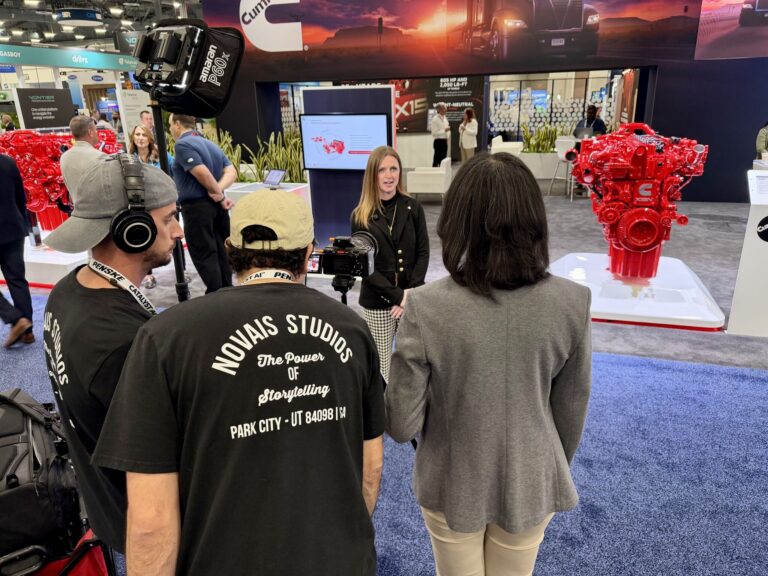 Tradeshows
ACT Expo ACT News Cummins booth and Ride & Drive
Engineering High-Impact Displays for Clean Energy Leaders When heavy-duty innovators need to make an impression on the exhibition floor, the details matter.…
Read more