

The way industrial brands communicate complex mechanics has shifted dramatically. Static blueprints and dry spec sheets no longer cut it when you are trying to pitch multi-million-dollar machinery to skeptical buyers. At Techcom Inc, we see engineering visualization as a core part of the product development cycle rather than an afterthought. When you bridge precision craftsmanship and digital innovation, you give stakeholders something they can actually feel, test, and interrogate.
Moving Beyond the Blueprint
Mechanical storytelling relies on clarity. Traditional marketing materials often fail to show what is happening beneath the sheet metal. By combining physical craftsmanship and digital visualization, manufacturers turn hidden internal mechanisms into the star of the show. Clients stop trying to imagine how a gear train works because they can see it moving, whether through a meticulously milled physical model or an immersive digital twin.
The Role of Advanced Fabrication
Building effective demonstration tools requires more than a 3D printer running overnight. It takes real material expertise to make plastics look like machined aluminum and to ensure moving parts actually hold up under trade show conditions. Advanced 3d printing for manufacturing lets us produce internal geometries that traditional CNC milling cannot touch. We pair those printed parts with hand-finished metalwork to create hybrid displays that look and feel entirely authentic.
How do aerospace manufacturers use digital innovation alongside physical craftsmanship?
Aerospace teams deploy advanced 3d printing for manufacturing alongside precision cutaways to test turbine dynamics while keeping structural weight down. Techcom Inc builds hybrid models that let engineers inspect internal tolerances that standard CAD files obscure.
What role does augmented reality play in heavy machinery training?
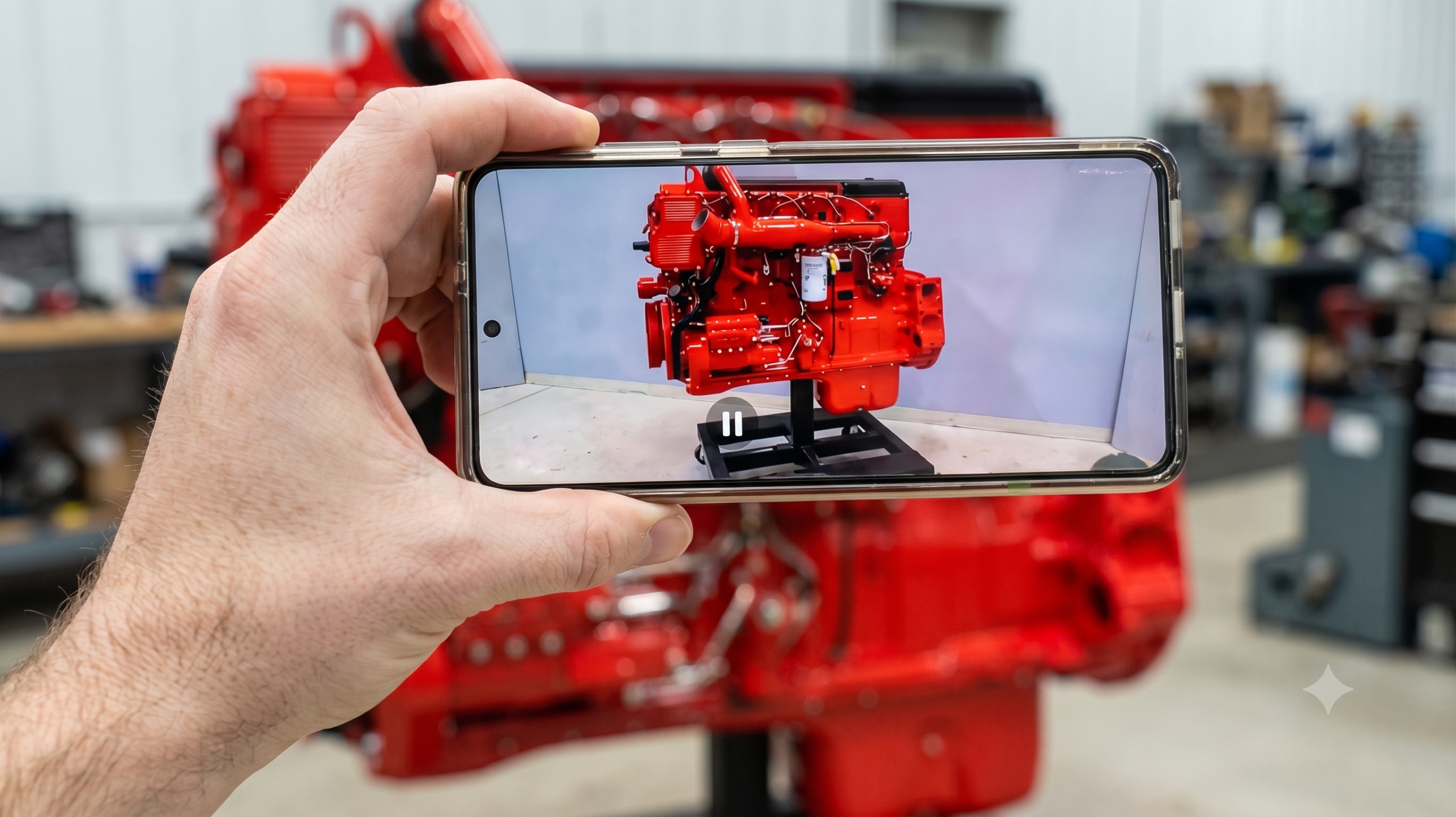
Augmented reality industrial training places digital schematics directly over physical hardware so technicians practice high-risk repairs safely. This approach reduces machine downtime and cuts onboarding time for new mechanical engineers.
Why combine custom cutaway displays with interactive electronic technical manuals?
Linking physical hardware to interactive electronic technical manuals gives operators real-time diagnostic feedback tied to specific mechanical components. At Techcom Inc, we sync these touchpoints so maintenance crews spend less time flipping pages and more time fixing issues.
Key Benefits of Combining Physical Displays with AR/VR
- Maximized Knowledge Retention: Pairing a tactile mockup with augmented reality industrial training ensures teams absorb complex spatial data twice as fast as reading standard documentation alone.
- Error Reduction on the Factory Floor: Operators reference interactive electronic technical manuals overlaid directly onto physical equipment, cutting out guesswork during assembly and maintenance.
- Accelerated Design Validation: Merging physical craftsmanship and digital visualization lets engineers spot mechanical interference issues before committing to expensive tooling runs.
- Simplified Global Collaboration: Stakeholders across different continents interact with the same digital twin while examining physical prototypes, keeping everyone aligned on custom cutaway displays and functional specs.
1. Product & Cutaway Displays
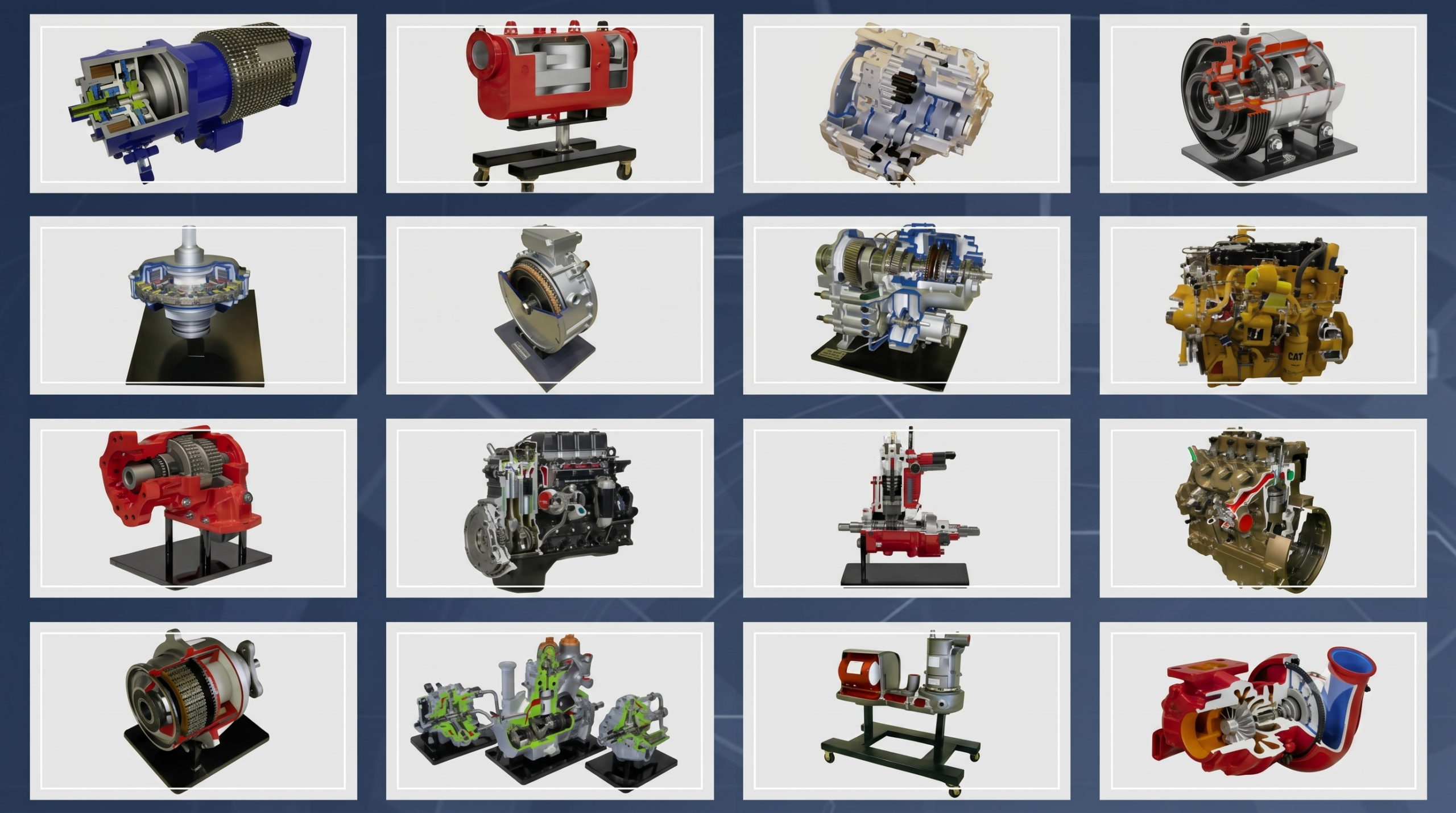
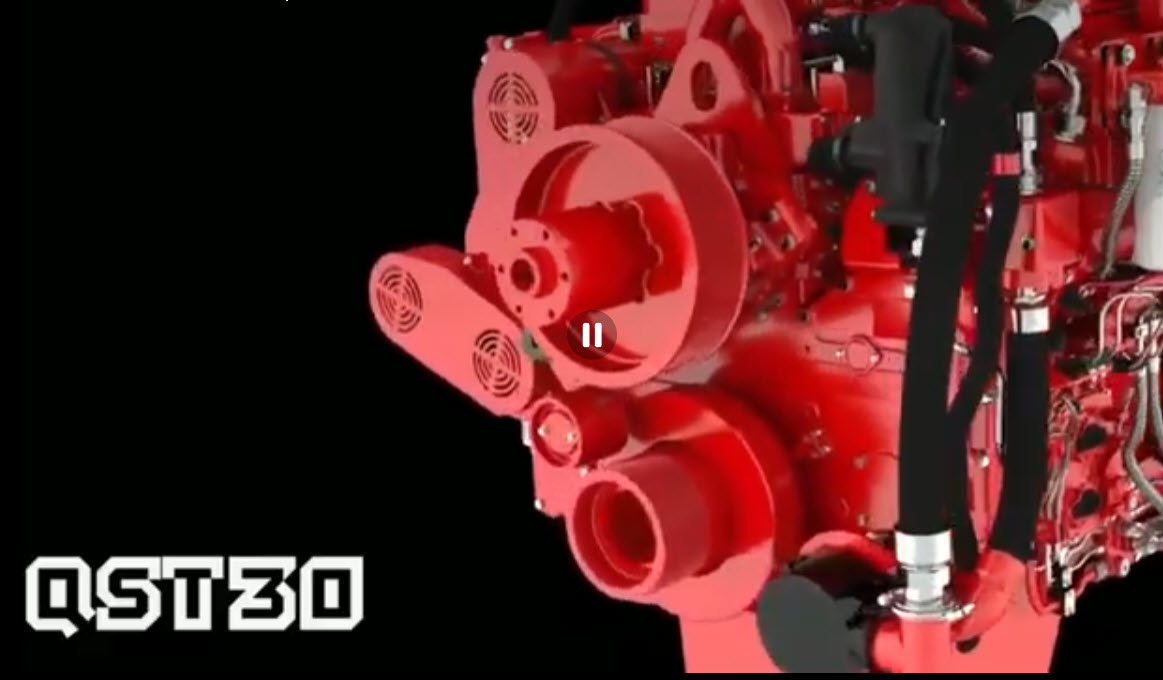
- Engine & Motor Cutaways: Real-world product displays using genuine parts and components to reveal internal mechanics.
- Motorized & Static Displays: High-performance equipment showcases for corporate centers and trade shows.
- Working Model Simulations: Functional modules that visually represent internal processes.
2. Digital Visualization & AR/VR
- Augmented Reality (AR): Overlaying digital data onto real-world equipment for training and remote maintenance.
- Virtual Reality (VR): Fully immersive 3D environments for risk-free operator training and simulations.
- 3D Animations: Photo-realistic visualizations of low or zero-emission solutions and complex machinery.
3. Advanced 3D Printing & Additive Manufacturing
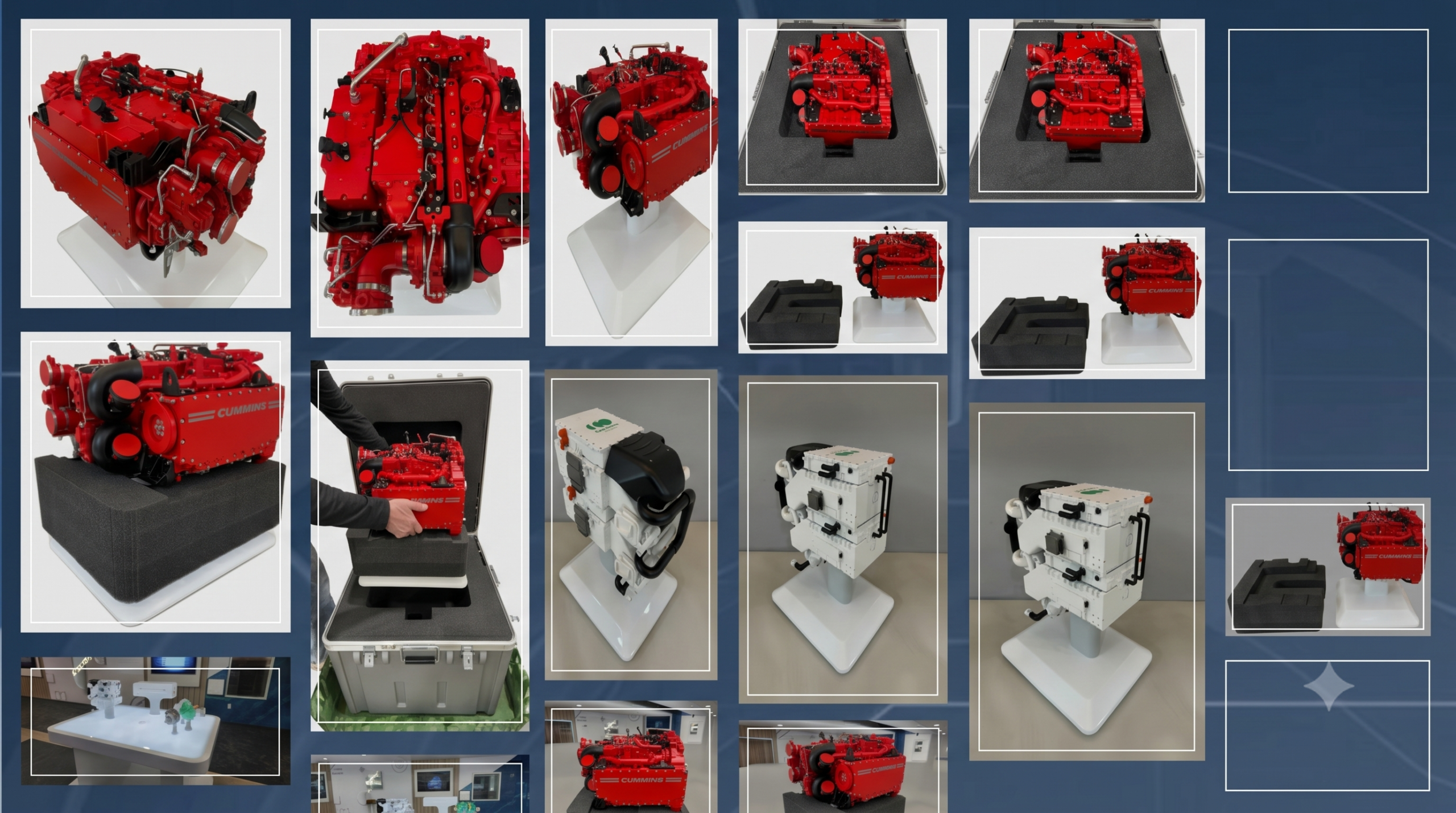
- High-Resolution Prototyping: Rapid development of components like fuel systems and drivetrain parts.
- Military-Grade 3D Projects: Creating critical components for the Optionally Manned Fighting Vehicle (OMFV) and other defense initiatives.
- Marketing Models: Visually stunning 3D-printed displays for technical presentations.
4. Technical Publications & Documentation
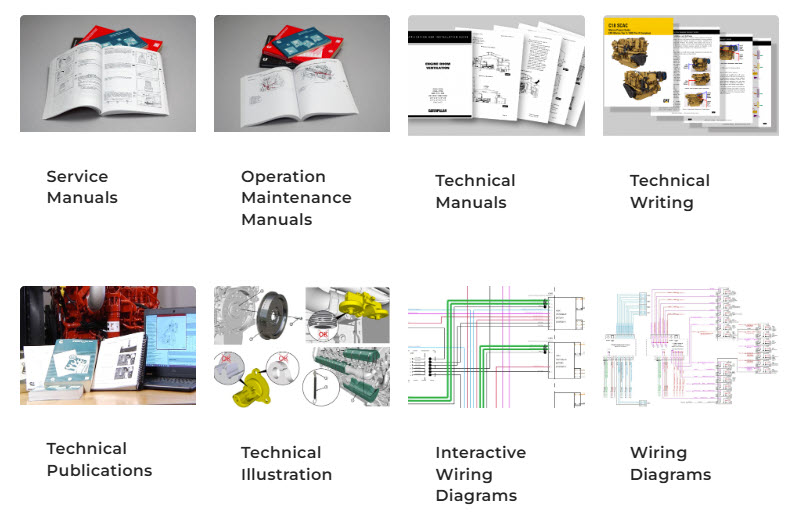
- IETM & IETP: Interactive Electronic Technical Manuals/Publications (Class 1–6) for aerospace and defense.
- Interactive Parts Catalogs (IPC): Web-based platforms for streamlined parts identification and eCommerce.
- Manufacturing Process Documentation: Detailed assembly and machining guides for factory workstations.
5. Specialized Training & Marketing
- Multimedia Production: Scriptwriting, graphics, and translation for global instructional programs.
- Trade Show Strategy: Integrated marketing assets and booth displays for major events like CONEXPO 2026.
Industry Applications
Manufacturing: The Future of the Factory Floor
In the manufacturing sector, TECHCOM’s services drive efficiency and safety. Manufacturing Process Documentation provides technicians with precise, graphic-rich instructions that reduce errors on the assembly line. For larger facilities, Factory Visualization Animations — such as those completed for Fairfield Oerlikon — allow stakeholders to plan workflows and optimize floor layouts before a single machine is moved.
Furthermore, AR/VR training modules have become indispensable. Operators can “practice” on virtual replicas of heavy machinery, learning emergency procedures and SOPs without the risk of equipment damage or physical injury. This significantly reduces onboarding time and increases operational resilience.
Medicine: Precision and Compliance
The application of TECHCOM’s capabilities in the Medical and Healthcare industries focuses on high-stakes training and regulatory compliance.
- Interactive Electronic Technical Publications (IETP): Essential for operating complex medical imaging equipment, ensuring maintenance personnel have instant access to up-to-date procedures.
- Interactive Parts Catalogs: Facilitates rapid identification of specialized components in medical devices — critical for minimizing downtime in clinical environments.
- Process Documentation: Documentation that meets the rigorous standards of FDA and ISO compliance.
- Cutaway Displays: Used to demonstrate the internal mechanics of medical hardware, from surgical robots to diagnostic scanners.
Frequently Asked Questions
It is a specially crafted product where sections of the outer casing are removed to expose internal components, providing a transparent view of the engineering and functionality.
No. We utilize genuine parts and components to provide the authentic weight, texture, and technical accuracy required for high-level training and professional marketing.
They enhance customer understanding, demonstrate quality craftsmanship, and highlight unique selling propositions (USPs) in a tangible, memorable way.
Yes, we specialize in both static and motorized displays that simulate real-world movement and operations.
We serve the automotive, aerospace, military, agricultural, marine, HVAC, medical, and general manufacturing industries.
An IETM is a digital portal that manages technical documentation, compressing volumes of text into searchable, interactive pages with video and sound.
Augmented Reality (AR) overlays digital instructions onto real equipment, allowing trainees to receive live guidance and alerts as they perform tasks.
Yes, TECHCOM provides custom, integrated solutions that include both the physical hardware and the proprietary software.
We utilize a variety of additive manufacturing processes, including laser curing and high-resolution resin printing, tailored to the specific needs of the prototype or display.
We provide 3D-printed components, drivetrain training cutaways, and interactive manuals for major military projects like the OMFV.
An IPC is a web-based platform that allows users to identify and order parts directly from 3D manuals or technical drawings.
Yes, our multimedia team provides full-service production, including scriptwriting, graphics, and professional narration.
It is technical writing and imagery that describes machining or assembly procedures at a workstation to ensure quality and consistency.
Yes, we provide translation services to ensure your technical manuals and training modules are effective in global markets.
Timeline depends on complexity, but we manage the process from “concept to crate” to meet specific deadlines, such as upcoming trade shows.
Yes, we have recently completed photo-realistic 3D marketing presentations for low and zero-emission solutions with partners like Accelera by Cummins.
Our headquarters is in Indianapolis, IN.
Yes, we can take your existing engineering data and transform it into high-definition animations or interactive models.
Our focus is on the transition from “Concept to Crate,” ensuring that 3D-printed assets are not just accurate prototypes but also durable, visually striking marketing tools.
You can contact our team directly through our Capabilities page to discuss your project specifications and receive a tailored proposal.
Keep Reading
Related stories.
 3D Printing
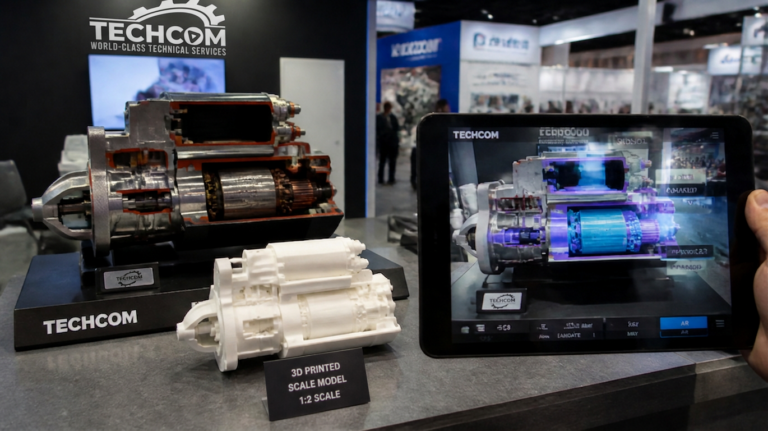
Cutaway, 3D Print, or AR: Which Trade Show Display Is Right?
Cutaway vs. 3D-Printed Model vs. AR: Which Display Is Right for Your Show? The short answer: a physical cutaway stops traffic and…
Read more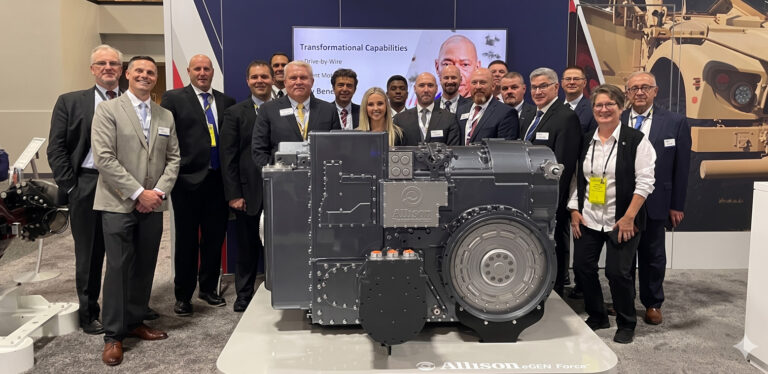 INSIGHTS
What “WOSB” and “DoD-Ready” Actually Means for Your Program
What "WOSB" and "DoD-Ready" Actually Mean for Your Program "WOSB" means TECHCOM is certified by the U.S. Small Business Administration as a…
Read more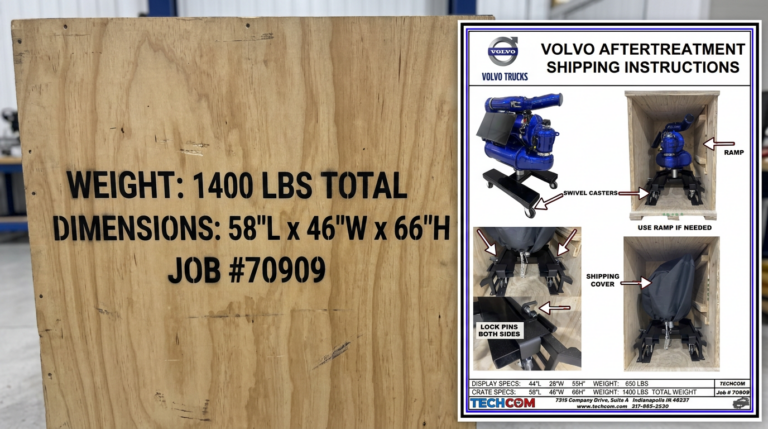 INSIGHTS
Crating a Two-Ton Engine Display for Trade Shows
How to Crate a Two-Ton Engine Display So It Arrives Show-Ready A two-ton engine display arrives show-ready when the crate is engineered…
Read more