
Engineering the Future of Power Generation

At Techcom Inc, we recently teamed up to bring a complex engineering vision to life through the Cummins 3D printed generator model. This project pushed the boundaries of what additive manufacturing can do for heavy industry, requiring exact scaling of intricate components like the engine block, alternator, and exhaust assemblies. By combining high-resolution stereolithography with robust industrial polymers, our team produced a physical asset that captures both the aesthetic and mechanical nuances of Cummins energy solutions.
From CAD File to Industrial Showcase
Building a large 3D printed generator prototype demands more than just pressing print. Our engineers worked directly from original CAD data, optimizing wall thicknesses and internal support structures to ensure structural integrity without adding unnecessary heft. The resulting industrial 3D printed scale models give stakeholders a tangible way to evaluate complex spatial arrangements long before tooling begins. It is a direct approach to bridging the gap between digital design and physical reality.
How long does it take to produce a large 3D printed generator prototype?
Production typically takes between one to three weeks, depending on the physical dimensions, geometrical complexity, and post-processing requirements of the specific Cummins energy solutions 3D printing project.
What materials are used for industrial 3D printed scale models?
We primarily use engineering-grade photopolymers and durable thermoplastics that mimic the mechanical properties of final production materials while maintaining a surface finish ready for trade show deployment.
Can these functional generator models be customized with branding?
Yes, every model we produce can be color-matched, painted, and detailed with exact corporate branding and metallic finishes to replicate final factory conditions for marketing or client presentations.
Why Additive Manufacturing Wins for Energy Models
- Exceptional Precision: Replicates complex internal ductwork, cooling fins, and wiring harnesses that traditional machining or hand-assembly simply cannot touch.
- Significant Weight Reduction: Hollow-core construction methods cut shipping and handling weight in half, making these massive display models far easier to transport to global trade shows.
- Trade Show Utility: Creates immediate visual impact on the exhibition floor, drawing high-value prospects and engineering partners directly to your booth with a tangible conversation starter.
- Rapid Design Iterations: Allows engineering teams to update physical models overnight when design specs change, keeping marketing and sales collateral completely synchronized with current manufacturing output.
Keep Reading
Related stories.
 3D Printing
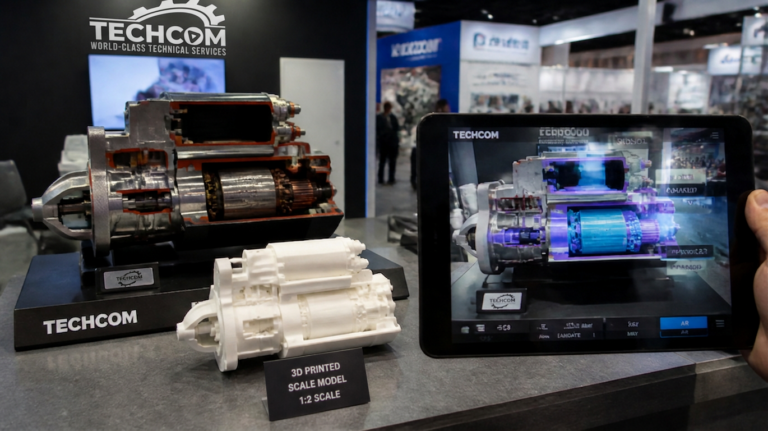
Cutaway, 3D Print, or AR: Which Trade Show Display Is Right?
Cutaway vs. 3D-Printed Model vs. AR: Which Display Is Right for Your Show? The short answer: a physical cutaway stops traffic and…
Read more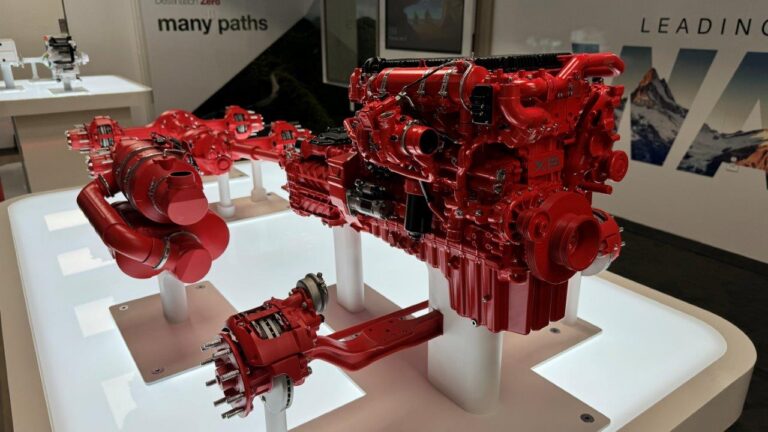 3D Printing
3D Printing Trade Show Presentations
Closing Deals with Tangible Hardware Most trade show floors are a sea of flat screens and generic banners. When you hand a…
Read more 3D Printing
3-D Printing Curing Process
When you scale up additive manufacturing, post-processing stops being a simple step and turns into a critical engineering challenge. Large resin parts…
Read more