At trade show displays, watching a motor spin doesn’t tell the whole story. To appreciate its engineering, you have to look inside and see how it works. An electric motor cutaway is a physical unit machined open to expose internal components like copper windings, the rotor, bearings, and the stator core, for education and sales. TECHCOM, based in Indianapolis, Indiana, builds these functional visual tools for industrial, powertrain, and defense manufacturers nationwide.

When engineers need to explain electromagnetic induction, or sales teams need to prove build quality to hesitant buyers, brochures fall short. Showing the actual hardware changes the conversation. That’s why we put our expertise and passion into crafting the finest electric motor cutaways.
Why Cut Open a Perfectly Good Motor?
The answer is clarity, education, and a level of understanding that no diagram or 3D model can fully replicate. For years, I’ve seen the “aha!” moment light up people’s eyes when they first encounter one of our cutaways. Whether they’re engineering students, seasoned maintenance technicians, or curious enthusiasts, the visual impact is immediate. Abstract terms like “stator windings,” “rotor bars,” and “air gap” become tangible.
Why Technical Sales Rely on Sectioned Motor Models
Sales cycles for heavy industrial equipment are long. Engineers want proof of robust construction, reliable insulation, and tight machining tolerances long before they sign a purchase order. A cutaway removes the guesswork. Instead of asking a client to imagine the thickness of the steel laminations or the quality of the varnish on the copper wire, you put the physical assembly on the conference table. Clients can touch the section, inspect the bearing journals, and trace the airflow paths.
- Instantly communicates manufacturing quality and precision tolerances
- Eliminates abstract explanations during complex technical presentations
- Creates a tactile anchor for trade show booth visitors
- Withstands frequent shipping and handling between client sites
Engineering Precision in Custom Electric Motor Cutaways
An effective display model means cutting through tight tolerances without disturbing the geometry. At TECHCOM, we section heavy-duty industrial units and high-performance EV systems with extreme mechanical precision. Our machinists use a mix of wire EDM, high-precision CNC milling, waterjet sectioning, and careful hand-finishing to expose everything from the deep-set stator windings to the rotor bars, without warping the housing. We preserve the exact alignment of air gaps and cooling channels so your audience gets an honest, functional look at how the torque happens. We deburr, clean, and often color-code or polish every cut so engineers and buyers can trace flux paths and coolant lines at a glance.
Transforming a working production motor into an exhibition-grade piece is a subtractive art. It starts with evaluating the housing’s thermal and structural properties, because cast iron, aluminum, and fabricated steel behave differently under aggressive CNC milling and waterjet passes. Technicians strip the unit of hazardous lubricants, map out cut lines that preserve structural rigidity, and remove specific angular quadrants. That leaves the air gap, rotor bars, and winding overhang fully visible without delaminating the stator stack.
Motor Cutaway Workflow
- CAD evaluation and structural integrity check
- Fluid and lubricant purging
- Precision CNC milling and waterjet sectioning
- Manual deburring and component polishing
- Motorization and baseplate integration
The result is manufacturing craftsmanship meeting technical marketing: a cutaway that looks as clean in person as it does on a blueprint. For more examples, see how motor cutaways showcase advanced manufacturing techniques.
More Than Just a Section: A Story Unveiled
When we create an electric motor cutaway, we’re not making a random slice. We’re telling a story. Each cut is planned to reveal critical components and show how they relate. We choose angles that best showcase the winding patterns, the fit of the bearings, the robust housing construction, and the connection points.
Key Components Highlighted in Motor Cutaways
- Stator Windings: Precision-milled to show copper pack density, insulation layers, and slot wedge placement.
- Rotor Assemblies: Sectioned to reveal internal permanent magnets, squirrel cage bars, or copper rotor construction.
- Cooling Jackets: Opened up to display internal fluid channels, helical paths, and thermal management features.
- Bearings and Shafts: Exposed to demonstrate load handling, alignment tolerances, and lubrication routing.
- Commutators and End Rings: Cut cleanly to show brush contact points, connection integrity, and structural weld zones.
Applications in Training and Trade Shows
Industrial training centers use sectioned hardware to teach apprentices how magnetic fields interact with rotor squirrel cages. Instead of staring at 2D textbook diagrams, trainees inspect real failure points, winding insulation classes, and bearing seating surfaces.
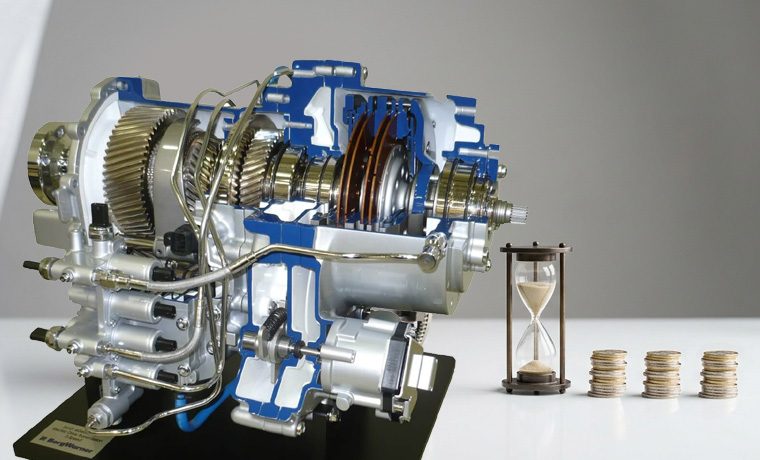
On the trade show circuit, an animated cutaway commands attention. For many displays, we integrate low-RPM gearmotors so the internal rotor spins while the housing stays sliced open. When an engineer hears the quiet hum of a hidden gearmotor turning the internals of one of our gearmotor cutaways, they stop walking. That visual engagement starts a technical dialogue that static posters or digital screens can’t match.
Also, see Training Cutaways.
Alternatives When Sectioning Isn’t Practical
When physical sectioning is impractical because of weight, budget, or shipping constraints, engineering teams turn to other visualization methods:
- 3D Printed Models: Scaled replicas made from polymer materials. Lightweight and inexpensive, but they lack the authentic metallic weight and exact material properties of the original unit.
- Augmented Reality (AR) Overlays: Software that projects digital 3D models onto tablet screens. Excellent for remote training, though they lack tactile feedback.
- Virtual Reality (VR) Simulators: Immersive environments where users pull apart motors in a digital workspace. High development cost, and they require specialized hardware for every user.
Comparison of Motor Visualization Methods
| Method | Tactile Feedback | Portability | Real Materials | Cost Tier |
|---|---|---|---|---|
| Physical Cutaway | High (Real Metal) | Moderate to Low | Yes | High |
| 3D Printed Replica | Moderate (Plastic) | High | No | Medium |
| Augmented Reality | None | High | No | Medium-High |
| Static CAD Rendering | None | Maximum | No | Low |
Recent Posts
- Visualizing Zero-Emission Powertrains: Cutaways and 3D Models for Hydrogen and EV Systems
- How Much Does an Engine Cutaway Cost? Factors That Drive Price and Timeline
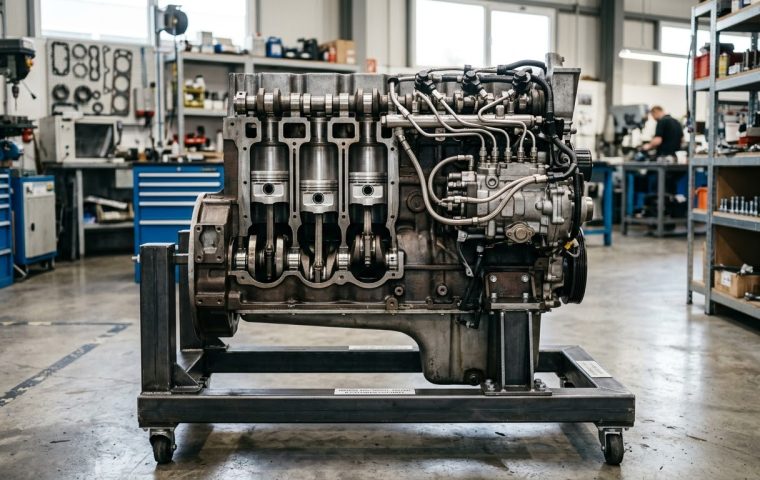
- Diesel Engine Cutaways: Anatomy & Trade Show Displays
- Where to Order Automotive Engine Cutaways: Sourcing Guide
- Aircraft Cutaways: Engineering Displays & Training Aids
- Electric Motor Cutaway: Engineering and Training Guide
- Vehicle Cutaway Showing Components: Engineering Display Guide
- Cutaway Motorcycle Engine: Engineering Display & Mechanics
- Automobile Cutaway Displays
- Airplane Cutaways: Exploring the Inner Workings of Flight
- Axle Cutaway Displays
- Boat Cutaways
- Construction Equipment Cutaways
- Diesel Cutaways
- Driveline Cutaways
FAQ
What is an electric motor cutaway?
It is a physical unit machined open to expose internal components like copper windings, the rotor, bearings, and the stator core for education and sales. It lets technical buyers inspect internal build quality directly.
How are electric motor cutaways manufactured?
We use precision waterjet cutting, CNC milling, and manual deburring to remove specific sections of the housing and core without damaging internal geometry or separating the stator laminations.
Where are sectioned motor models used?
Mainly in engineering trade shows, corporate briefing centers, technical vocational schools, and internal R&D labs, to demonstrate complex assemblies and explain operating principles to non-technical buyers.
Can any electric motor be turned into a cutaway?
Most standard AC induction motors, DC motors, servo drives, and specialized gear motors can be sectioned, as long as the frame’s structural integrity remains intact after the cutaway quadrants are removed.
How heavy are custom electric motor cutaways for trade shows?
Most of our trade show units range from 50 to 300 pounds, depending on whether we are sectioning a compact EV motor or a massive industrial drive. We can hollow out non-structural areas and build custom flight cases with built-in ramps to keep your booth setup manageable.
Can you build cutaways from our proprietary CAD files?
Yes. We routinely work under strict NDAs to section client-supplied prototypes or production units based on exact engineering models. Our team handles everything from reverse engineering to final physical sectioning.
Do you add motorized motion to the displays?
We often integrate low-RPM, variable-speed gear motors so clients can watch the rotor spin inside the exposed stator. It adds a dynamic layer to visitor engagement on the trade show floor.
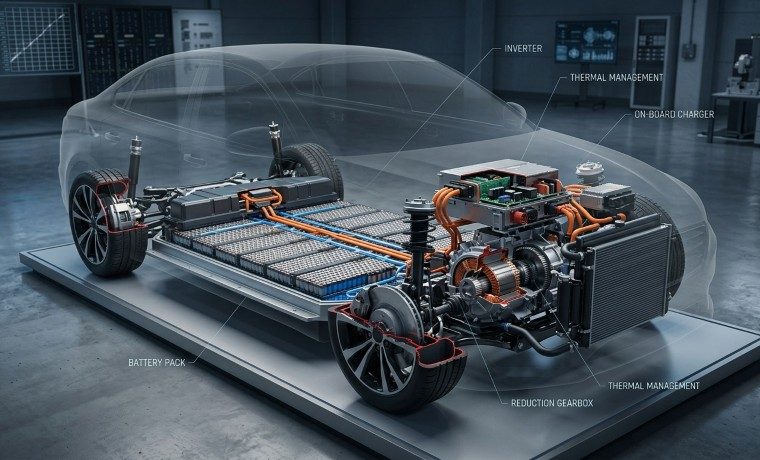
EV Motor Cutaway Displays
We provide cutaway displays from small electric motors to large product displays, both static and working modules. TECHCOM also builds EV cutaways for classroom teaching, training, and informative demos on the trade show floor.
Building Your Next Display
When you need to turn complex engineering into an instant conversation starter, TECHCOM delivers. Our electric motor and EV cutaways cut through the noise at trade shows and training centers by making hidden technology transparent. We combine deep machine shop experience with a keen eye for visual impact, giving your sales and engineering teams a physical tool that builds buyer confidence. Contact our team in Indianapolis to talk specs for your next display project.

About TECHCOM
The company's mission is simple: solve problems. We take our clients' problems and make them our own. As a certified SBA WOSB and WBE, TECHCOM offers boutique-agency agility with the past performance of a global defense contractor — supporting programs like the OMFV, Cummins ACE, and Allison eGen Force with the technical visualization and documentation that power the modern warfighter.
Be sure to follow us for updates on social media on Facebook, X, and LinkedIn.