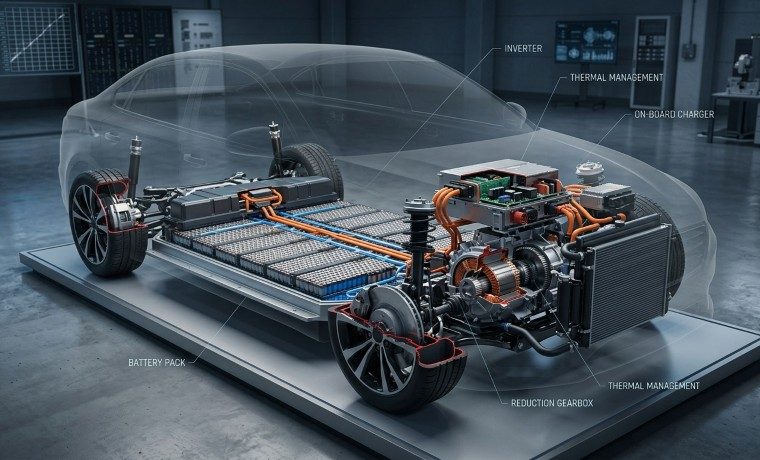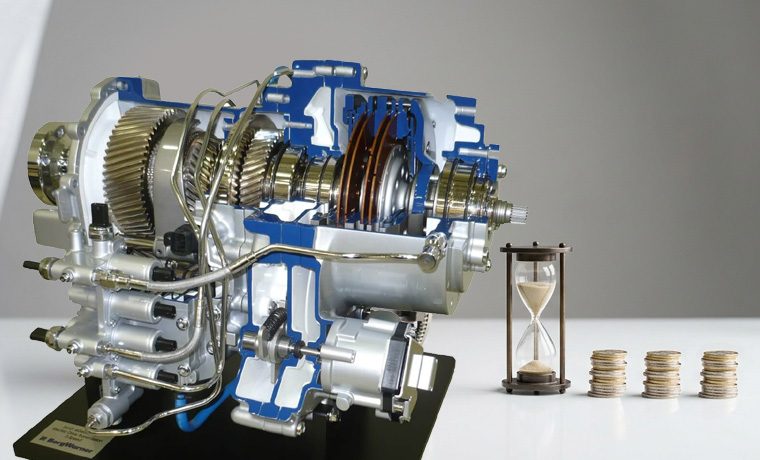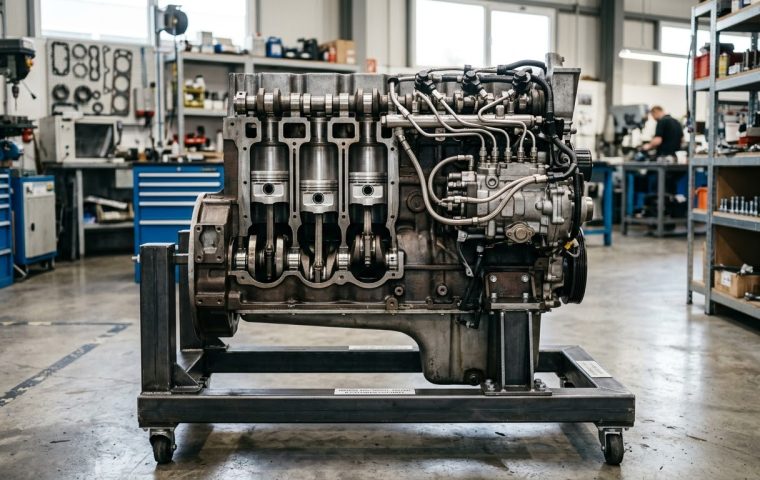
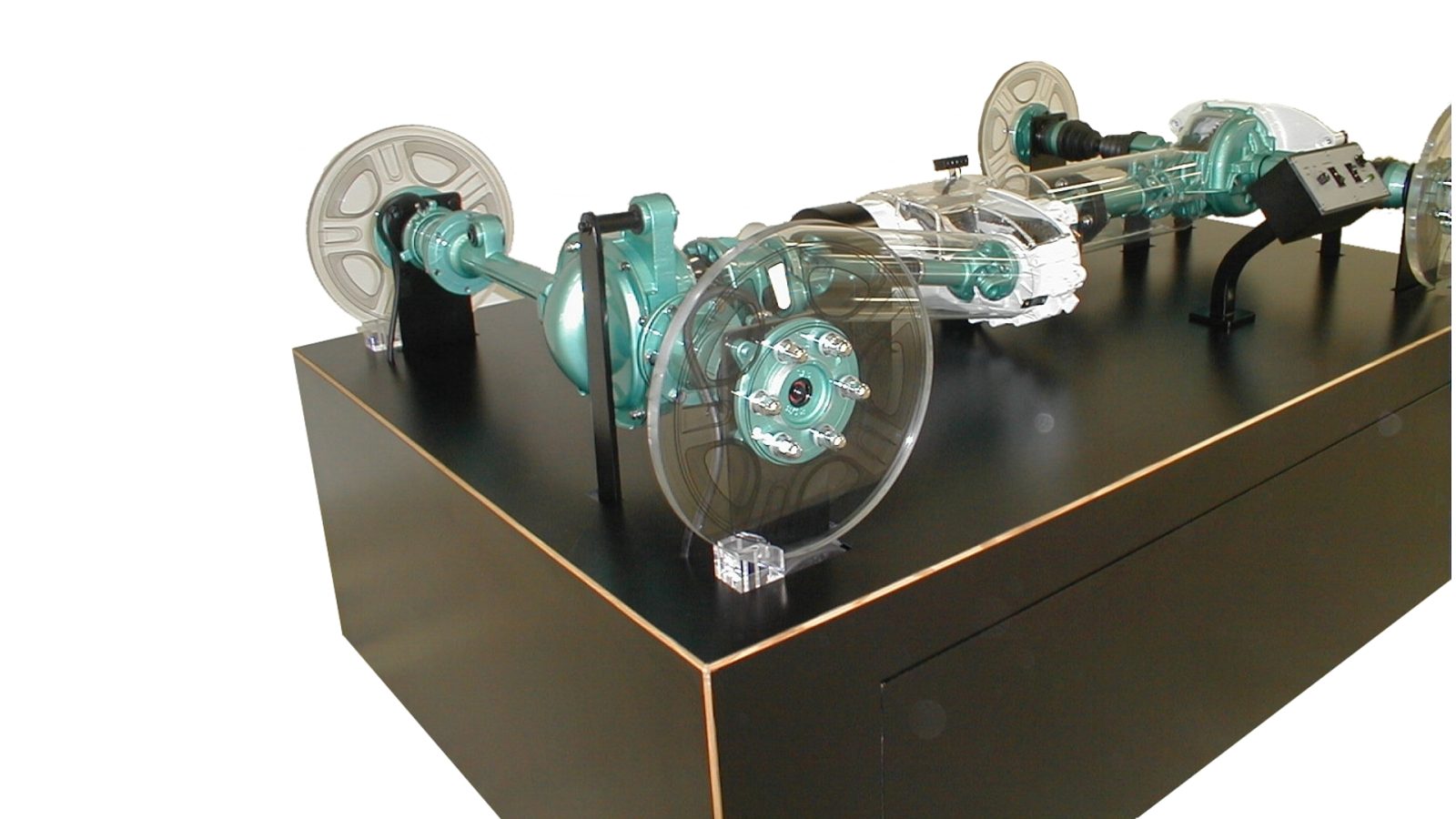
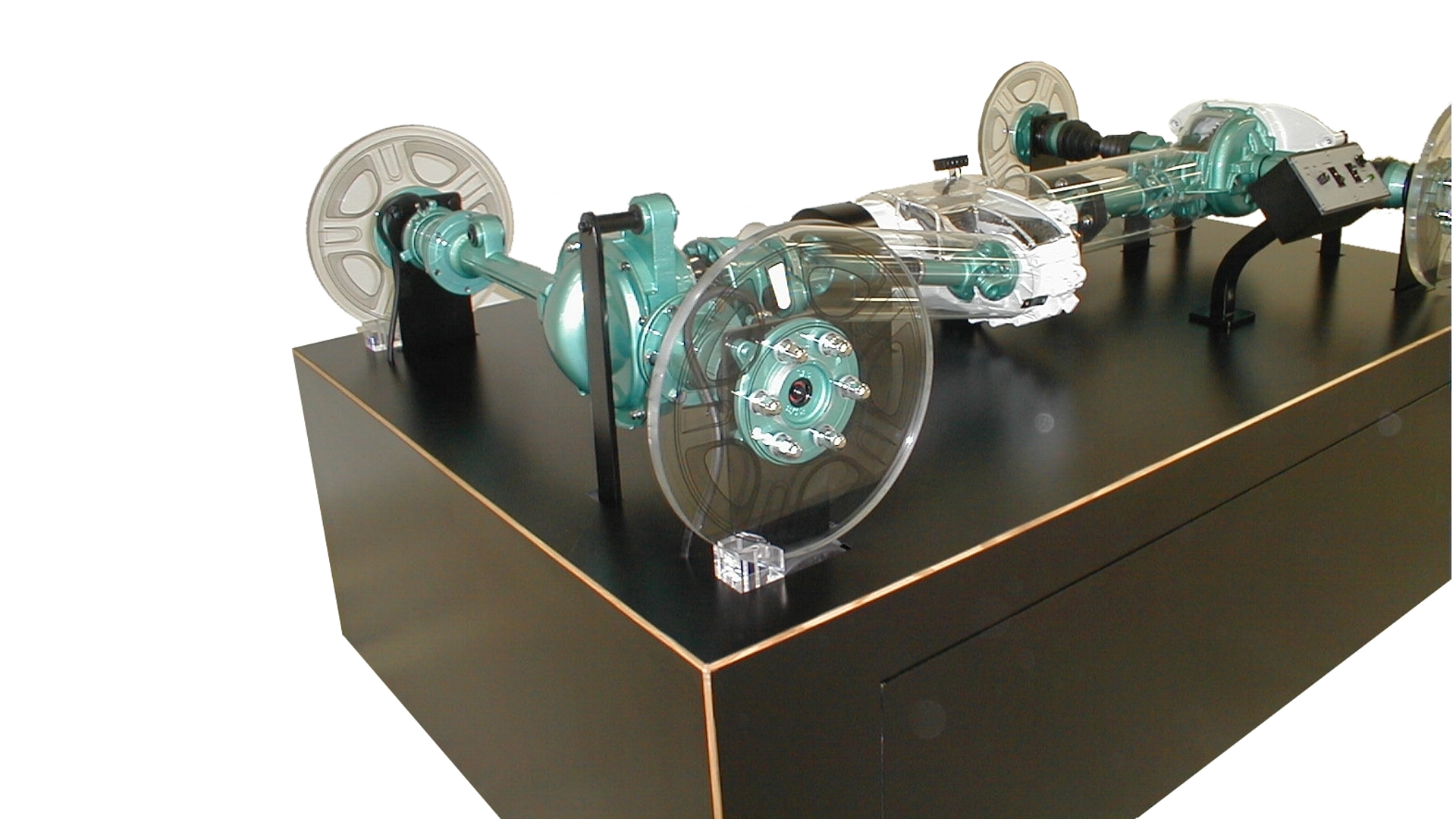
 A vehicle cutaway is a physical model, chassis, or full automobile sectioned strategically to expose its internal mechanical, electrical, and fluid systems. We build custom vehicle cutaway displays that turn complex engineering into clear, memorable brand experiences. They range from full-scale trade show centerpieces to precision engine cutaway displays for technical training.
When engineers, marketers, and educators need to communicate internal mechanics instantly, CAD drawings and digital renderings often fall short. Stripping away sheet metal and housings reveals the spatial relationships, material thicknesses, and tolerances hidden underneath.
Vehicle Internal and External Cutaways
From engines and transmissions to suspension systems and electrical components, a well-built cutaway shows how interconnected parts work as a whole. Through careful disassembly and strategic cutting, the display exposes the mechanisms that power a vehicle. Viewers can see how parts fit together and function, which makes cutaways effective teaching tools for enthusiasts and industry professionals alike.

Anatomy of an Engineering-Grade Component Cutaway
A reliable cutaway means planning every vertical and horizontal slice before the first cut begins. Our fabricators analyze CAD data to identify primary load paths and critical focal points, so every cut line respects structural integrity while exposing vital systems.
Strategic sectioning techniques
- Window Milling: Cutting clean rectangular or circular ports into heavy casings, such as transmission housings or differential covers, to reveal gear teeth and fluid channels.
- Plane Slicing: Removing an entire longitudinal or transverse half of a vehicle or subassembly to expose the exact centerline geometry of components.
- Tiered Stepping: Creating multi-level stepped cuts on complex blocks so viewers can see internal oil galleries, coolant passages, and cylinder bores at varying depths simultaneously.
- Transparent Substitution: Replacing standard metal or cast-iron outer covers with high-impact clear acrylic or polycarbonate plates to protect internal moving parts while keeping them fully visible.
These methods let visitors and engineering students trace power flow from the transmission input shaft to the drive wheels without guessing what happens inside the casing.
Keeping the structure sound
Fabricators use precision cutting tools such as waterjets, wire EDMs, and diamond saws, followed by structural reinforcement frameworks. These braces maintain the load-bearing integrity of the chassis and surrounding structure, so the display stays stable during transport and exhibition.
Enhancing Mechanical Visibility with Motion and Color
A static cross-section shows spatial arrangement. Controlled motion and visual coding turn it into an active teaching tool. Our engineers often integrate low-RPM electric gearmotors with variable-speed drives, so viewers can watch pistons rise and fall, crankshafts rotate, and synchronizer rings engage in real time. Clear panels keep people safe from high-voltage or high-temperature operating conditions.
Color supports comprehension too. Our finishing teams paint internal fluid paths, high-pressure oil lines, coolant jackets, and electrical conduits in contrasting, standardized hues. Lubricants are sometimes simulated with clear dyed fluids, or bare metal is polished so machining marks stand out under exhibit hall lighting.
From vehicle to finished display
- Exterior Body / Sheet Metal: Removed with precision waterjet or saw cuts.
- Structural Frame & Chassis: Opened up through selective milling and windowing.
- Internal Subsystems (Powertrain, Hydraulics, Wiring): Protected and animated with clear acrylic and motion integration.
- Finished Display: Ready for the trade show floor or training lab.
How Vehicle Cutaways Are Created
Building a cutaway blends artistic skill with engineering expertise.
- Select the vehicle. Engineers and designers weigh the model’s complexity, the importance of its components, and the display’s target audience.
- Plan the sections. A detailed plan outlines which areas to cut away and how best to showcase the internal features.
- Disassemble carefully. The exterior and specific parts are removed to expose the internal workings, without damaging the components being highlighted.
- Cut, mold, and assemble. Depending on whether the model is static or interactive, technicians use cutting, molding, and assembly to improve visibility and clarity. This stage is time-consuming and needs a thorough understanding of the vehicle’s architecture.
- Finish and test. Painting, component labeling, and any interactive elements come last. The finished display is tested for accuracy and functionality.
Types of Vehicle Cutaways
Static cutaway models
The most common type is the static cutaway model: a physical vehicle with sections removed to reveal the internal components. These models are shown in museums, automotive shows, and dealerships. They are often made from durable materials such as plastic, fiberglass, or metal.
Cutaways combined with AR and digital screens
Interactive cutaways add digital screens or augmented reality features so users can engage with components in real time. A viewer might point a device at a cutaway section to see that part’s function or an animation of how it operates. This approach works especially well in training settings, where it improves engagement.
Virtual reality and digital cutaways
Digital cutaways exist only in virtual formats, such as online resources, educational apps, or VR environments. They allow extensive detail and can be rotated or zoomed in ways a physical model cannot. That makes them useful for self-learners and educators.
Alternatives and Comparison
Physical sectioning remains the gold standard for tactile engagement, but other visualization methods may suit your constraints:
- Interactive 3D Digital Models: CAD-based browser tools let users rotate and click through virtual components on touchscreens or tablets.
- Augmented Reality (AR) Overlays: Software projects digital component layers over a standard, unmodified vehicle using mobile devices or headset hardware.
- Scale Rapid Prototyping: 3D-printed miniature assemblies replicate complex internal geometries at a fraction of the weight and size.
For a deeper look at how physical builds stack up against digital options, see our breakdown of comparative trade show exhibits.
| Feature / Method | Physical Vehicle Cutaway | Interactive 3D CAD Model | Augmented Reality (AR) | Scale 3D-Printed Model |
|---|---|---|---|---|
| Tactile Realism | High (Real materials and weight) | None (Screen touch only) | None (Virtual overlay) | Moderate (Plastic/resin feel) |
| Durability | High (Engineered for shipping/shows) | Unlimited (Digital asset) | Dependent on hardware | Moderate (Fragile details) |
| Transport Weight | Heavy (Requires custom crating) | Zero (Cloud-hosted) | Zero (Device-dependent) | Light |
| Detail Depth | Actual internal machining | Infinite zoom capability | Layered visual data | Limited by print resolution |
Key Technologies in Modern Vehicle Cutaways
- Augmented Reality (AR) overlays synced with physical hardware to project digital telemetry data directly onto internal components.
- High-precision CAD data integration, so every cut line respects structural integrity while exposing vital mechanical systems.
- Integrated digital touchscreens and LED backlighting that guide viewer attention through specific operational sequences.
- Whisper-quiet electric drive motors that animate internal pistons, gears, and shafts at safe viewing speeds.
Purpose and Benefits of Vehicle Cutaways
Education and safety
Cutaways demystify complex machinery for consumers, mechanics, and students. They show how parts work together to make a functioning vehicle, which makes mechanical principles easier to grasp. By illustrating the location and function of components such as brakes, engines, and electrical systems, they also help owners understand maintenance and recognize potential issues.
Marketing and trade show impact
Cutaways are also powerful marketing tools. A well-crafted cutaway display highlights unique features, technology, and craftsmanship, and it communicates a model’s advantages over competitors. When you need to show what is happening beneath the sheet metal, standard marketing graphics do not cut it. Buyers and engineers want to see the actual mechanics.
Competing for foot traffic at major events takes more than a standard booth. Automotive trade show displays need to command attention from across the convention hall. A full-scale car or truck cutaway acts as an instant crowd magnet. We build exhibition hardware for durability, quick assembly, and visual impact under harsh convention center lighting. Each display is engineered to highlight your specific innovations, whether that is an intricate hybrid drivetrain or a lightweight chassis architecture.
Applications and Industries
- Trade Show Floor Displays: Automotive suppliers and heavy equipment manufacturers use large-scale chassis displays to stop foot traffic, draw media attention and qualified buyers, and let potential clients inspect manufacturing quality up close.
- Corporate Lobbies and Innovation Centers: R&D centers install permanent sectioned assemblies as centerpieces that show core innovations to visiting partners and prospective talent.
- Investor Relations and Boardrooms: Scaled custom vehicle cutaway models let executives demonstrate complex technology in high-stakes presentations and partnership meetings.
- University Automotive Laboratories: Engineering professors rely on sectioned drivetrains to teach kinematics, gear ratios, and material fatigue through direct observation. Technical schools, colleges, and vocational programs use cutaways for hands-on practice with vehicle systems.
- Corporate Technical Training Centers: Service technicians examine precision engine displays that expose internal combustion or electric motor mechanics. They learn service points, seal locations, and fastener torques before working on live machinery.
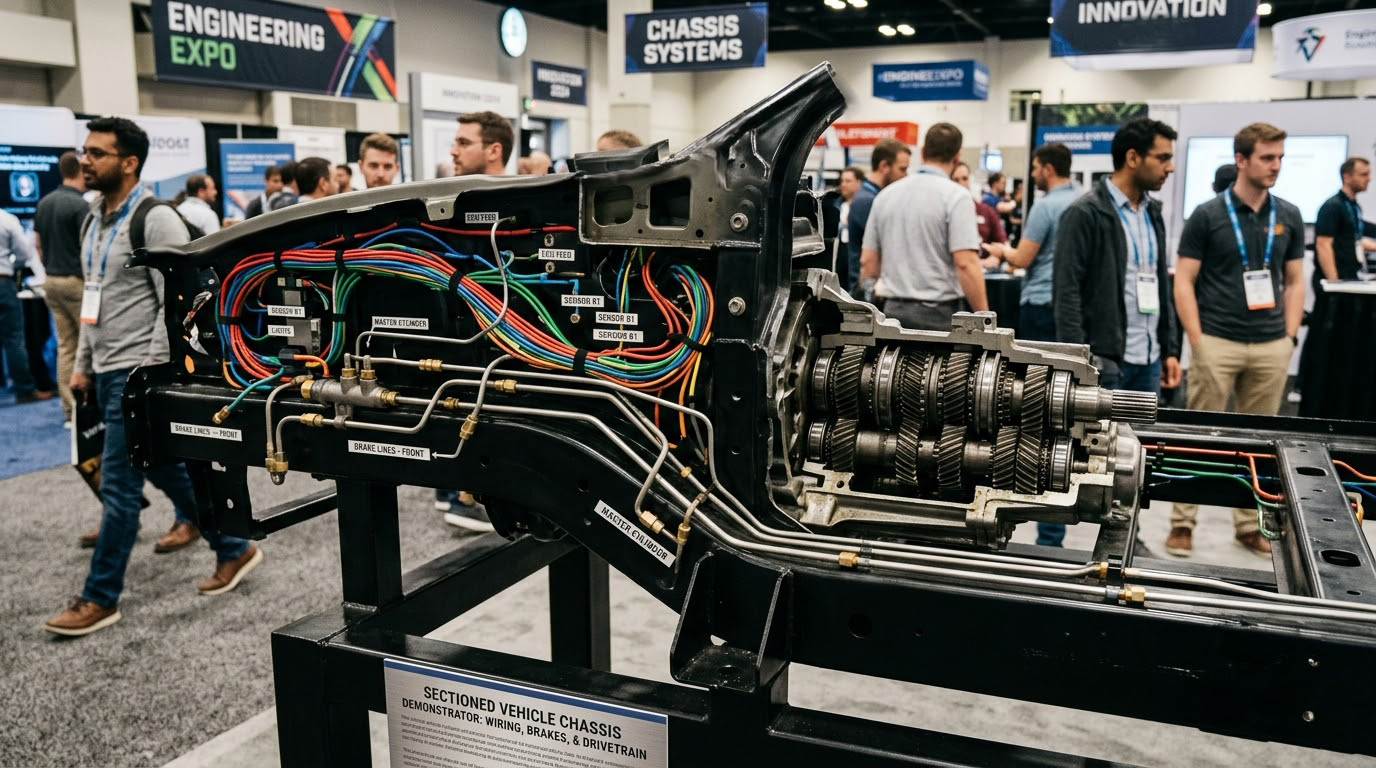
Industrial design firms also use vehicle cutaways to study ergonomics and functionality in automotive interiors. Mechanical engineering companies analyze cutaway models to improve designs or troubleshoot issues.
History and Evolution of Vehicle Cutaways
Cutaways date back to the early days of automotive engineering. In the late 19th and early 20th centuries, designers explained their vehicles’ complex inner workings with cutaway drawings in technical manuals and advertisements. The mid-20th century brought a surge in visual education and three-dimensional models that buyers could explore from multiple angles. These models marked a shift from flat illustrations to tangible displays.
Digital technology in the late 1900s and early 2000s changed the field again. Computer-aided design (CAD) software allowed precise digital representations of vehicles that can be viewed in three dimensions. Engineers can now produce detailed cutaway images for formats ranging from interactive apps to virtual reality environments.
Famous Vehicle Cutaways
- Volkswagen Beetle: Widely used in automotive education to illustrate its flat-four engine layout and the simplicity of its mechanical systems.
- Ford Model T: As one of the first mass-produced vehicles, its cutaway highlights a robust, straightforward chassis and an innovative assembly-line manufacturing process. It remains a teaching tool for the evolution of automotive design and production.
- Tesla Model S: Shows the electric motor, battery placement, and cooling systems, and how they differ from traditional internal combustion engines.
Collecting and Preserving Vehicle Cutaways
Collecting cutaway models has become a niche hobby for enthusiasts and professionals. Models range from simple representations to detailed, interactive exhibits, and rare or historically significant pieces may appreciate over time. Like any artifact, they are vulnerable to light, humidity, and temperature swings. UV-filtering display cases and climate-controlled spaces help, as do routine cleaning and inspection for wear. Museums and technical schools also preserve cutaway collections that document the evolution of automotive technology.
The Future of Vehicle Cutaways
AR and VR are among the most promising developments. Viewers can point a smartphone at a cutaway and see animated sequences of how parts work together in real time. Advances in 3D printing offer new ways to produce detailed, personalized cutaway models that highlight features unique to a particular vehicle, and quick prototyping allows more detail. As electric and autonomous vehicles become more common, cutaways will increasingly show electric drivetrains and advanced driver-assistance technologies.
FAQ
How long does it take to build a custom vehicle cutaway display?
Most custom vehicle cutaway projects take 8 to 16 weeks from when we receive the donor vehicle or CAD specifications to final delivery. The exact timeline depends on the complexity of the internal mechanisms, the vehicle scale, and any custom digital integrations you request.
Can you build cutaways for electric vehicles and hybrid powertrains?
Yes. We build modern EV and hybrid cutaways that safely showcase high-voltage battery packs, inverter systems, and dual-motor drivetrains without compromising safety protocols. Our team works to your engineering standards so high-voltage components are clearly marked and safely displayed.
Do you handle sourcing the donor vehicle for the project?
We can work with a donor vehicle supplied by your team or source the specific make and model through our industry network. Many clients ship pre-production prototypes or specific chassis directly to our fabrication facility.
How are internal parts exposed without structural failure?
Precision cutting tools such as waterjets, wire EDMs, and diamond saws are followed by structural reinforcement frameworks. These braces preserve load-bearing integrity and keep the display stable in transport and on exhibit.
What materials are used to highlight moving internal parts?
We replace opaque cast housings with clear acrylic or polycarbonate panels and add low-RPM electric motors. Viewers can observe gear meshing, fluid flow, and piston movement without exposure to high-voltage or high-temperature conditions.
Where are vehicle cutaways typically deployed?
They appear mainly at major trade shows, corporate engineering lobbies, university automotive labs, and technical training centers. They serve as focal points for explaining proprietary technology to clients, students, and technicians.
Conclusion
A vehicle cutaway showing components does more than show parts. It proves engineering competence through tangible craftsmanship, and it serves education, marketing, and safety alike. Whether you are preparing for a major industry expo or upgrading a technical training lab, a robust, expertly engineered display pays off in audience engagement.
TECHCOM is based in Indianapolis and builds for manufacturers nationwide. Tell us about your project through our contact page. We can create your next car cutaway, chassis cutaway, car components cutaway, car cutaway illustration, or cutaway computer rendering. Also see our automobile cutaways.
Recent Posts
- Visualizing Zero-Emission Powertrains: Cutaways and 3D Models for Hydrogen and EV Systems
- How Much Does an Engine Cutaway Cost? Factors That Drive Price and Timeline
- Diesel Engine Cutaways: Anatomy & Trade Show Displays
- Where to Order Automotive Engine Cutaways: Sourcing Guide
- Aircraft Cutaways: Engineering Displays & Training Aids
- Electric Motor Cutaway: Engineering and Training Guide
- Vehicle Cutaway Showing Components: Engineering Display Guide
- Cutaway Motorcycle Engine: Engineering Display & Mechanics
- Automobile Cutaway Displays
- Airplane Cutaways: Exploring the Inner Workings of Flight
- Axle Cutaway Displays
- Boat Cutaways
- Construction Equipment Cutaways
- Diesel Cutaways
- Driveline Cutaways
Product Displays
We provide various product displays, from small Point-of-Purchase to Major Trade Show Product Displays. For example, Truck cutaway displays, sectioned vehicles, Fleet training cutaways, and Vehicle cutaway models. Furthermore, TECHCOM offers the best cutaways in the business. For example, our working Model Simulations show off your vehicles and visually represent what is inside.

About TECHCOM
The company's mission is simple: solve problems. We take our clients' problems and make them our own. As a certified SBA WOSB and WBE, TECHCOM offers boutique-agency agility with the past performance of a global defense contractor — supporting programs like the OMFV, Cummins ACE, and Allison eGen Force with the technical visualization and documentation that power the modern warfighter.
Be sure to follow us for updates on social media on Facebook, X, and LinkedIn.